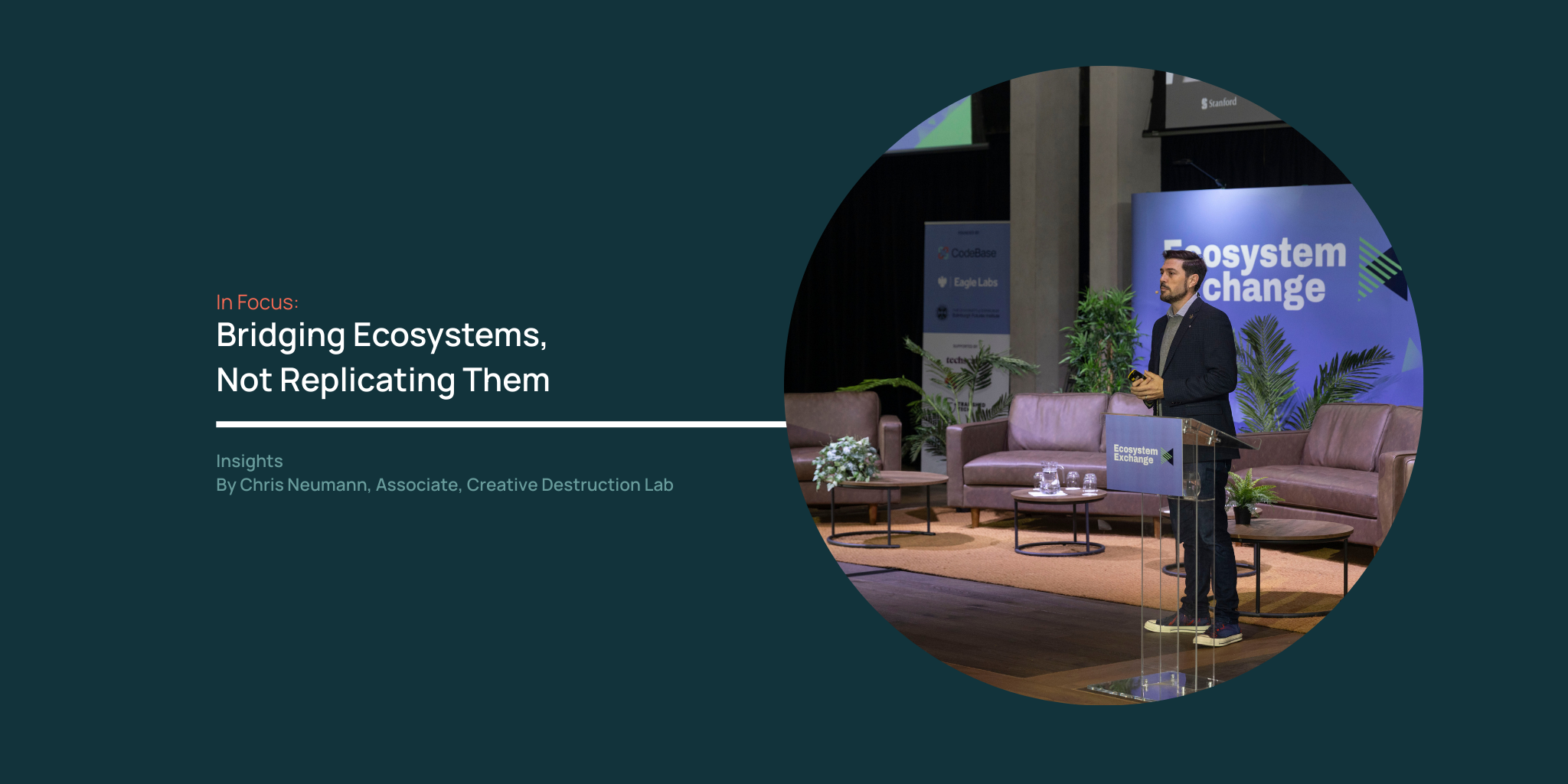
Bridging Ecosystems, Not Replicating Them
For years, ecosystems around the world have been trying to answer a question that refuses to go away: how do we build something that looks and performs like Silicon Valley? After working with founders across dozens of countries, and after spending a good part of my career at the intersection of early-stage company building and venture capital, I can say this with clarity: Most ecosystems get it wrong because they start with the wrong ambition.
Silicon Valley cannot be replicated. Yet, for some reason, ecosystems continue to try. No one proposes replicating Hollywood or Broadway, or Formula 1. Yet many regions still set out to build “the Silicon Valley of X”, without fully understanding what makes Silicon Valley Silicon Valley.
The real opportunity lies in a different direction. There are only three ecosystems in the world that operate on structurally unique rules: Silicon Valley, China, and everywhere else. Everywhere else has far more in common with each other than with either of those two. This is not a weakness. It is an advantage. Most of the world is building under similar conditions: finite capital, limited local investor density, uneven access to networks, and competing regional priorities. This gives every “everywhere else” ecosystem the chance to learn from each other, borrow what works, and adapt it to their own reality.
The most successful ecosystems are the ones that start by understanding what they can credibly and repeatedly do at home, and then build bridges for everything else.
The UK is uniquely positioned. It acts as a cultural and commercial bridge between Europe and North America. It understands the European market deeply while sharing language, norms, and business expectations with the United States. Not many regions have that advantage.
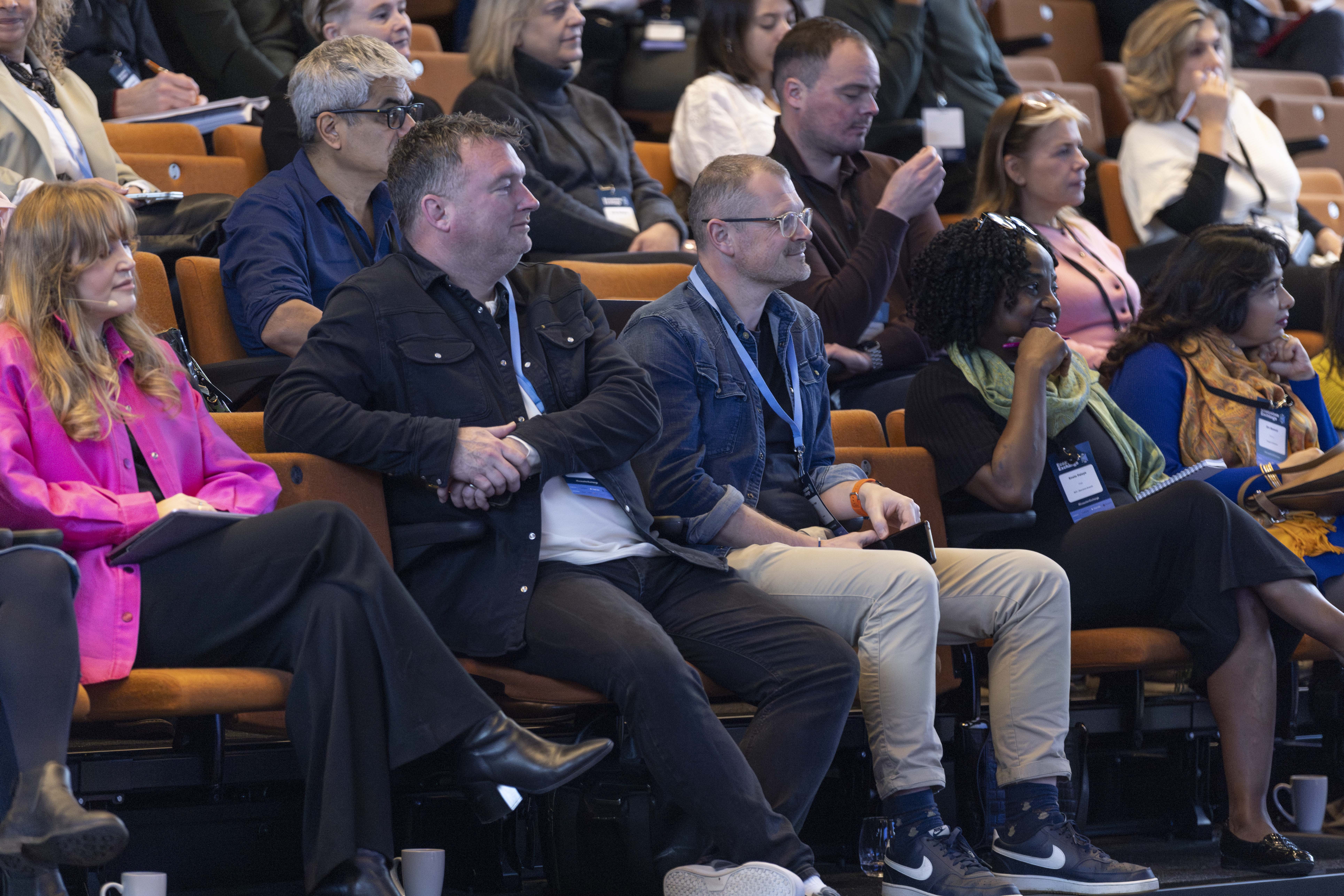
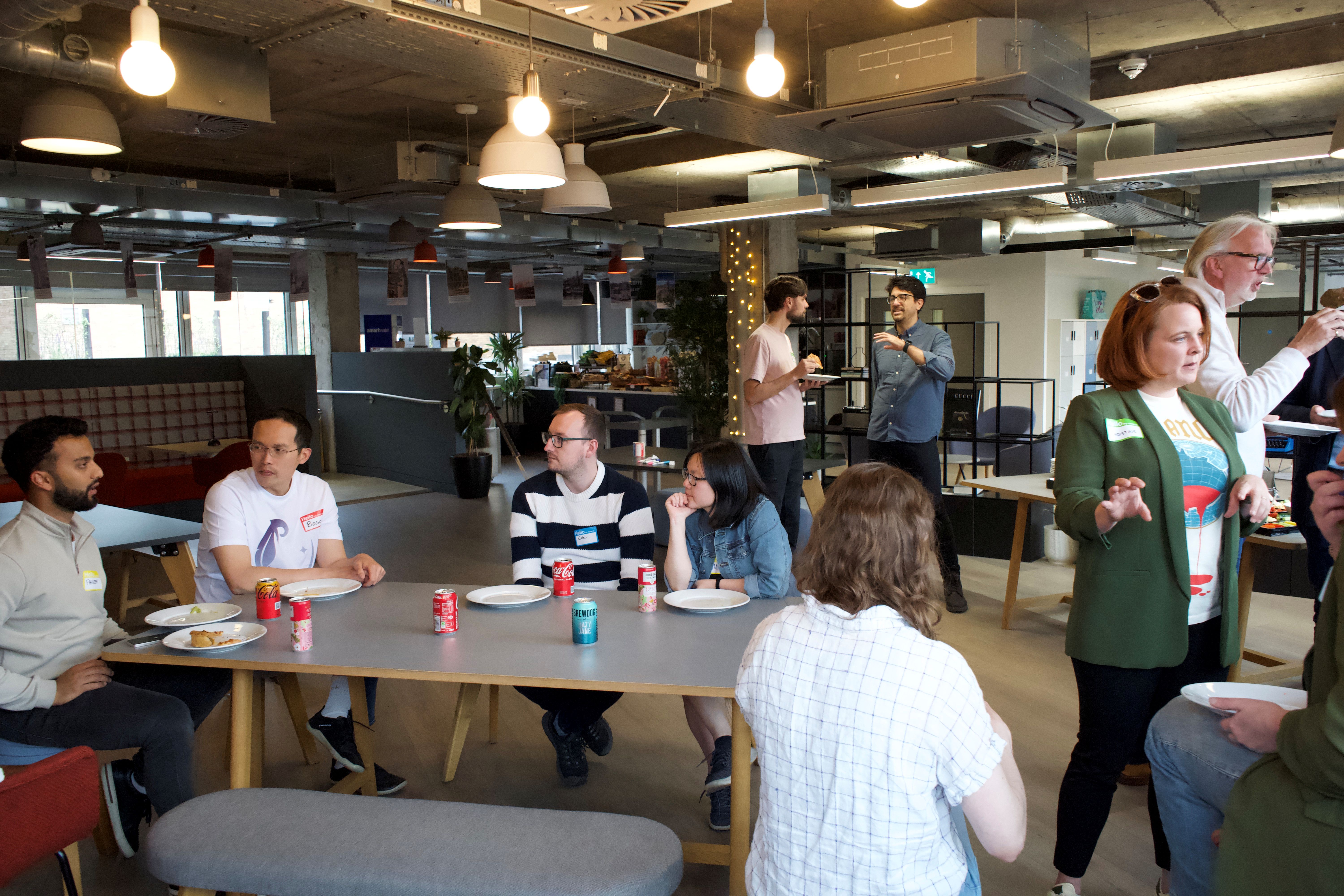
Ecosystem Exchange 2025 reflected this strength in action. It was one of the rare events where people did not skirt around difficult topics. They spoke honestly about what is working, what is not, and what needs to change. Most industry gatherings avoid that level of candour, yet it is essential for real progress. The two-day conference brought together the people who actually build ecosystems, not just contribute by way of expertise. That kind of environment is exactly what we need more of if we want stronger ideas, deeper collaboration, and a more evolved ecosystem across the UK and beyond.
The same principle applies to venture capital. Culturally, VCs have been mythologised. Many first-time founders see them as the gatekeepers of ambition, the anointers of quality, the people who determine who becomes a unicorn and who does not. This is a distortion caused by media and marketing. The truth is, founders are the scarce resource. Founders can build companies without venture capital. Venture capital cannot operate without founders who allow them in.
Moreover, VCs are not a uniform group. They do not all think alike. They do not make decisions based on collective wisdom. They see the world through different lenses, incentives, and theses. Even in the Bay Area, about 90% of VC-funded startups fail. Most founders raising their first institutional round need 100 to 150 meetings because the majority of those meetings will result in a no. It’s not personal. It’s statistical.
This is why most ecosystems need to help founders expand beyond their local investor pool. If a founder only pitches a narrow set of local investors, the math is already stacked against them. In countries where one city dominates the investment landscape, like London in the UK or Toronto in Canada, regional founders face even greater structural barriers. Good ecosystems give them the confidence, the pathways, and the relationships to reach wider.
The world is also shifting under our feet. The loudest voices in many ecosystems are often the oldest ones, but they are no longer the most in touch. Gen Z – the first AI-native generation — does not behave like the generations before it. They are not loyal to geography. They search for expertise first. They build differently, learn differently, and form communities differently. The pandemic accelerated this shift by placing an entire generation online during its formative years. For many Gen Z founders, there is no emotional or professional anchor to their local ecosystem. They will go wherever the most relevant knowledge is. That has profound implications for how we build support systems in the coming years.
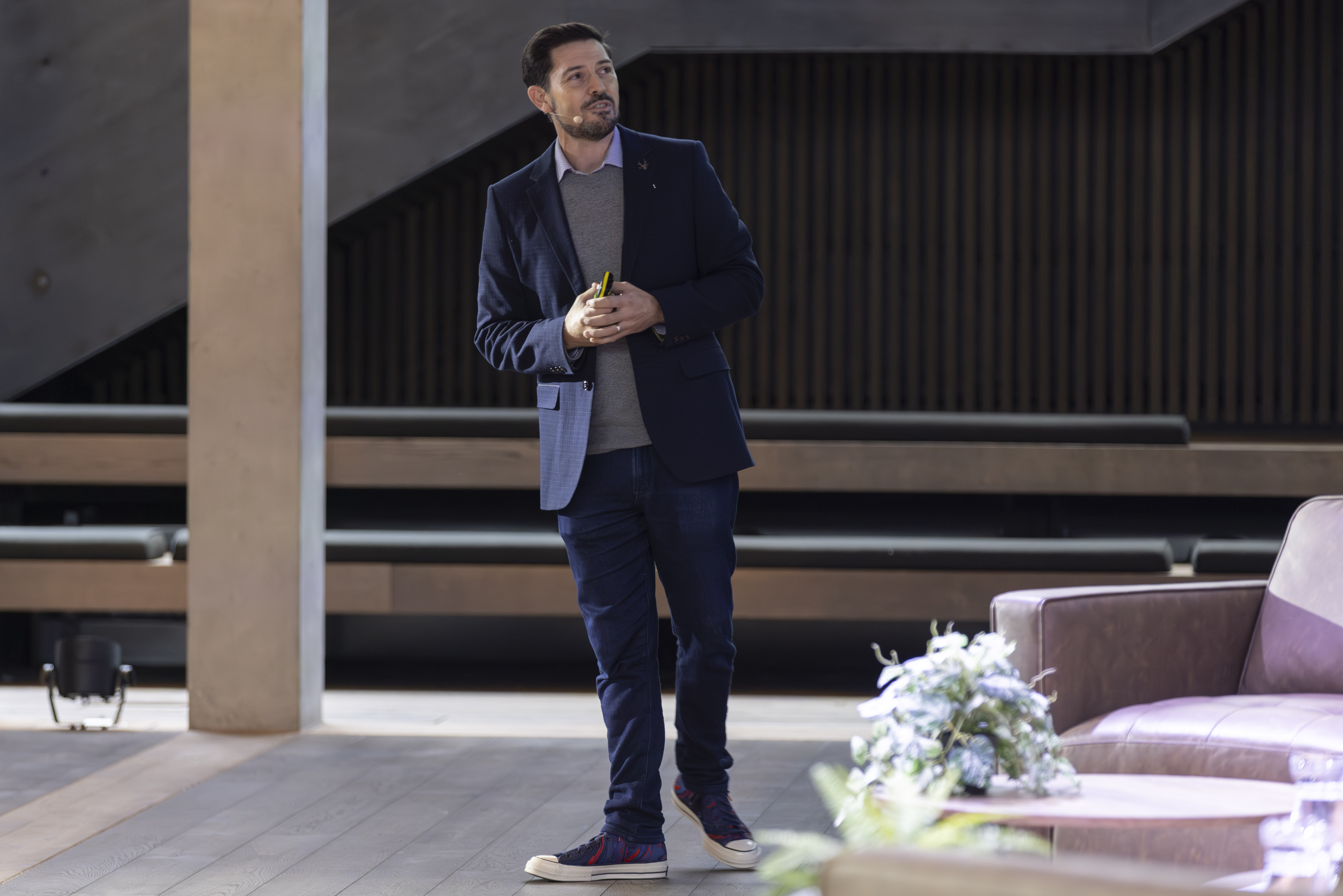
Ecosystems cannot afford to ignore this. They need young community builders at the table. They need models that reflect how the next founder class thinks. They need bridges that move at the speed of young founders, not the speed of legacy institutions.
The ecosystems that will win are the ones that accept what they can change, draw confidently from global expertise, and remove the hubris that leads them to believe all the answers exist at home. No ecosystem grows by looking inward. Growth comes from a clear understanding of local strengths, honest acknowledgement of local gaps, and the courage to plug into the world.
Looking ahead, I hope Ecosystem Exchange 2026 builds on this approach. I’d like to see more young builders in the room, more discussions rooted in data, and more opportunities for founders to shape the conversation directly. If we can combine that with the already strong lobby of cross-regional collaboration and willingness to confront uncomfortable truths, this event will continue to be one of the very few places where ecosystems genuinely move forward together.



.svg)