Techscaler Health & Medtech Innovation Summit
Scotland’s health and medtech sector is rich in clinical expertise, engineering capability, and translational research. The challenge remains in integration.
At the Techscaler Health & Medtech Innovation Summit, founders, clinicians, investors, and ecosystem partners gathered to explore what it actually takes to move from concept to procurement, from pilot to scale, and from local validation to international traction. The discussions, led by the CodeBase team including Charlotte Keeley (Programme Manager), Helen Tate (Head of Medtech Strategy & Partnerships), and Andrew Parfrey (Senior Vice President Commercial & University Lead, brought together leaders from NHS boards, innovation hubs, manufacturing, banking, validation labs, and venture capital to examine the system as it really operates.
The NHS Is Not a Single Door
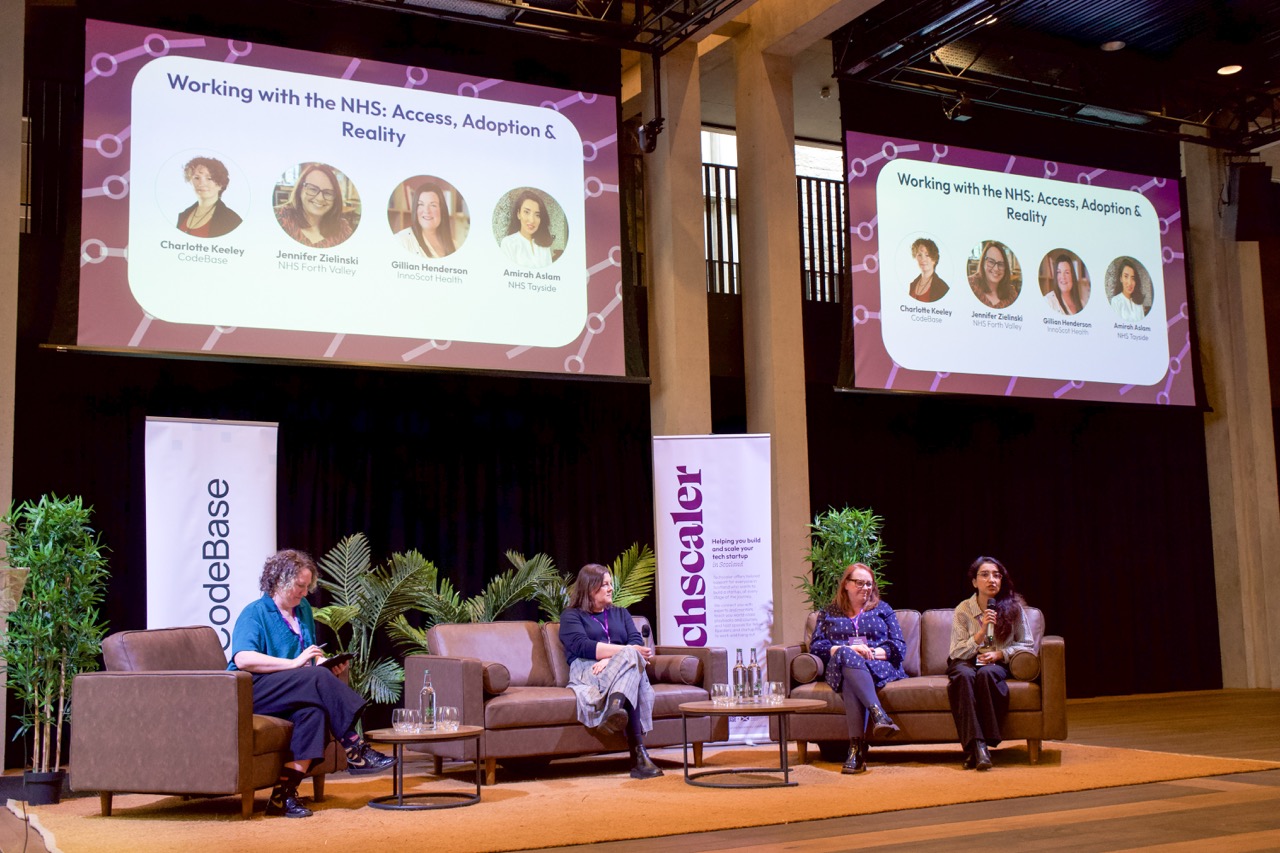
In the opening panel, hosted by Charlotte Keeley, Programme Manager, Jennifer Zielinski, Innovation Project Manager at NHS Forth Valley, Gillian Henderson, Head of Project Management at InnoScot Health, and Amirah Aslam, Senior Innovation Project Manager at NHS Tayside, picked up one of the most common musings: Getting into the NHS.
For many founders, “getting into the NHS” is framed as a singular milestone. In practice, it is a sequence of structured engagements, each dependent on readiness.
One of the most consistent messages across the opening panel was that innovation boards and innovation hubs exist as front doors, but they are not shortcuts. Founders who arrive with a loosely defined solution and an assumption of immediate pilot access often underestimate the preparatory work required.
Intended use is not limited to the bounds of regulatory formality. It is the anchor for everything that follows. To shift the track from feedback to ground-level coordination, innovators should be able to clearly define the clinical problem, the specific point in the care pathway they influence, along with their understanding of implementation realities.
Evidence generation, too, is frequently misunderstood. A pilot is not an early experiment to test an idea. It is the culmination of groundwork. Boards described the need for grant funding to secure clinician time, project management, and governance capacity before a pilot can run effectively. Without that scaffolding, even strong technologies stall.
Timeframes reflect this complexity. Three to six months before a pilot is not uncommon, particularly where information governance, digital sign-off, and risk mitigation are involved. For founders operating on a limited runway, that reality must be factored into commercial planning from the outset.
Validation Is Behaviour Change
Beyond the prototype, the conversation turned to sequencing.
Which comes first? Funding, validation, or manufacturability?
There was no consensus, and that in itself was instructive.
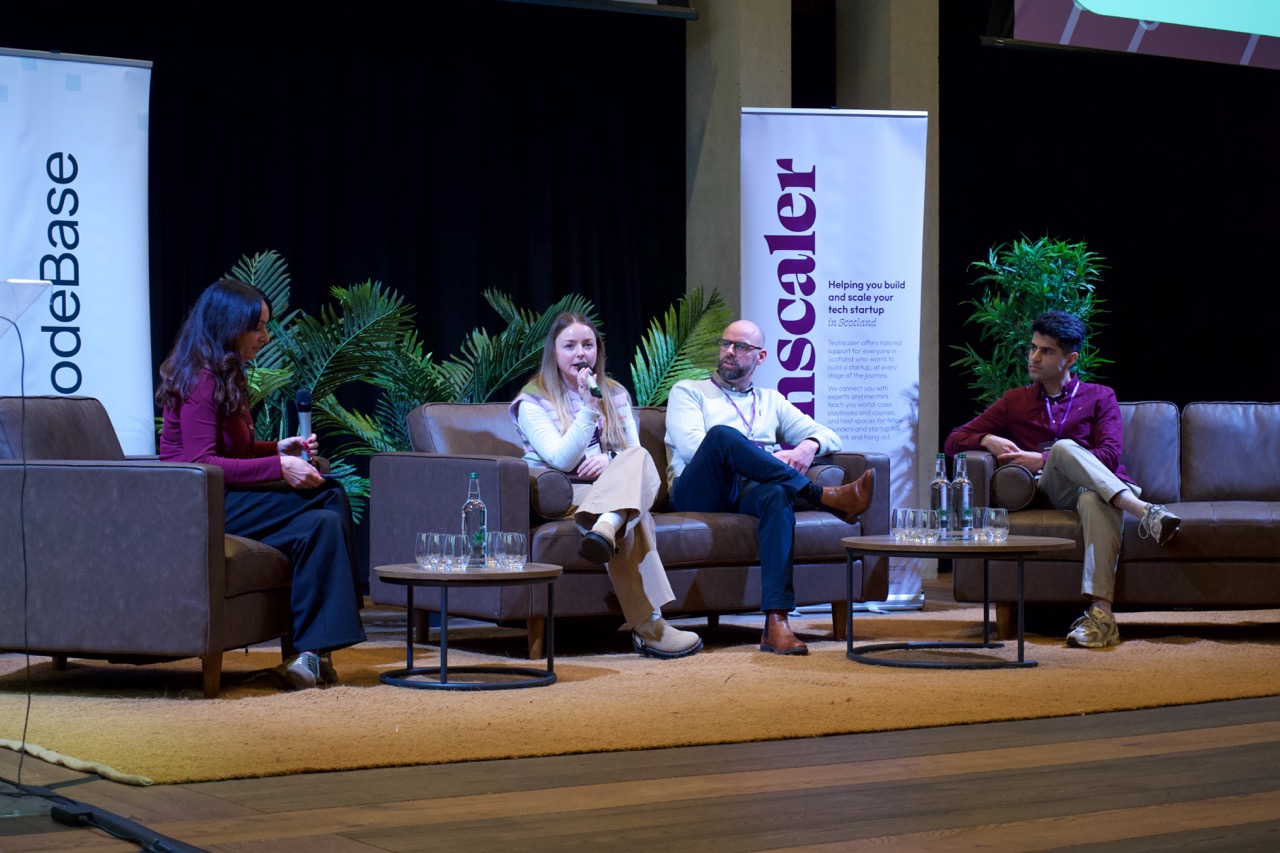
From the perspective of Hartesh Battu, practising GP and part of Digital Health Validation Lab, the priority is evidence planning. Gaps in health economics, budget impact, or regulatory pathways create downstream friction that can lead to serial grant applications simply to fill missing pieces.
From Ben Reasbeck’s (Head of Life Sciences and Health Technology at Barclays) perspective, validation was framed differently. Validation was described as the moment when evidence changes someone else’s behaviour, whether that is a clinician, a commissioner, or an investor. The question becomes: who is the next stakeholder in your journey, and what proof do they require?
Jane Crowley, Technology Specialist at Medical Device Manufacturing Centre, reinforced that manufacturability is not a late-stage consideration. Design decisions become expensive to reverse. Engaging manufacturing expertise early avoids building elegant prototypes that cannot scale sustainably.
Taken together, the panels suggested a more integrated view wherein credibility is built in layers. Clinical insight, manufacturability, health economics, and regulatory strategy are reinforcing signals that de-risk the journey.
From Pilot to Procurement
Even when pilots succeed, the path to procurement is rarely linear.
Public procurement rules reassert themselves once a trial concludes. Local thresholds may allow small-scale adoption, but national procurement processes introduce different constraints and timelines. Variation across boards and nations compounds the challenge.
NHS England, NHS Scotland, NHS Wales, and HSE Ireland operate through distinct structures, often with different buying authorities. For founders, the implication is strategic, where evidence alone does not guarantee scale. Understanding where decisions are made, who controls budgets, and how pathways differ across jurisdictions becomes as important as product performance.
At the same time, system pressure is creating new openings. Clinicians increasingly recognise capacity limits and are actively seeking solutions that relieve operational strain. Culture is shifting, albeit unevenly.
Founders in Practice
The summit’s third panel grounded the discussion in lived experience.
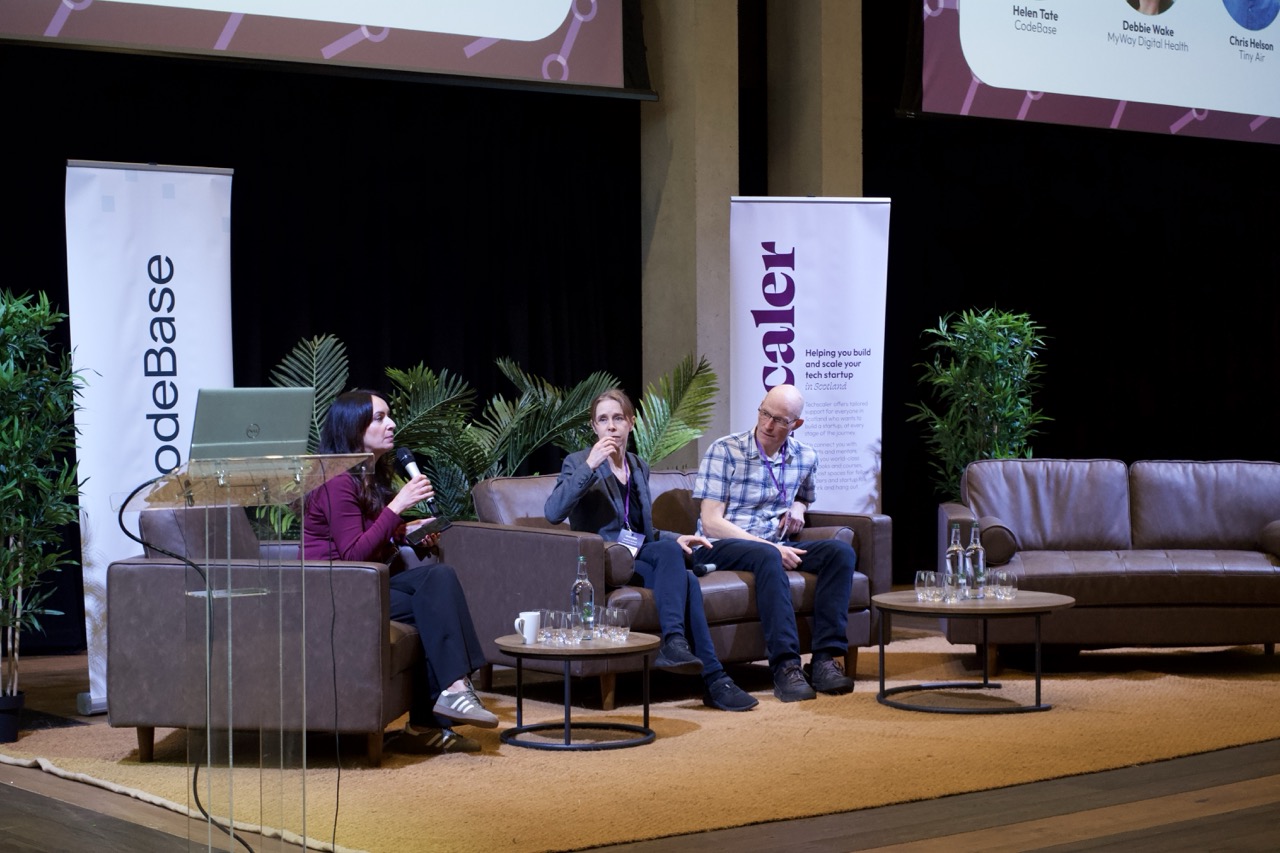
MyWay Digital Health and its founder, Debbie Wake, spun out of the University of Dundee, grew over several years through a combination of innovation funding, early NHS contracts, and reinvested revenue before raising its first institutional round. Innovate UK grants and NHS transformation funding enabled pilots that later converted into sustained commercial contracts.
Tiny Air and its co-founder Chris Helson, by contrast, entered healthcare from outside the sector, responding to an NHS problem statement and building relationships board by board. Early enthusiasm for them did not immediately translate into purchase orders. Scaling proved dependent on client readiness as much as product quality.
Both companies highlighted the curve between domestic traction and international opportunity. Evidence generated within the NHS provided a quality signal abroad, yet market dynamics often favoured faster movement overseas. In Singapore, decisions that took much longer in the UK progressed rapidly once value was demonstrated.
Internationalisation introduced its own considerations. In Saudi Arabia, partnership structures, local employment and long-term relationship building were essential to market entry. Though the lesson was not that one geography is superior. It was rather that the founders have responsibility to interpret signals and allocate energy accordingly.
The Investor Lens
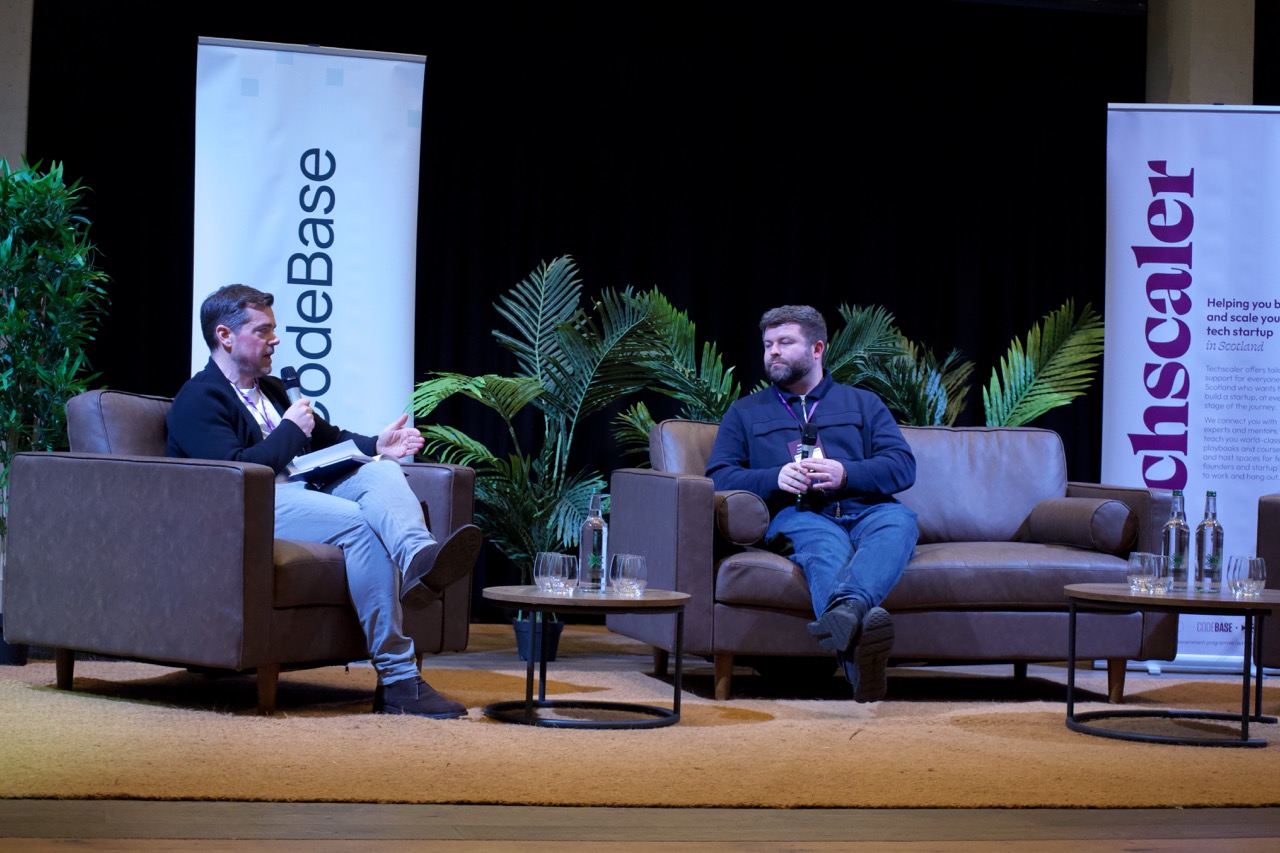
The final session, led by Andrew Parfrey in discussion with Aidan MacMillan, Investment Director at PXN Group, examined what attracts capital.
One of Aidan’s investment ventures, Current Health, was discussed in light of how early revenue is not always decisive. Early clinical validation, credible pilots, and a coherent go-to-market strategy can open seed and Series A capital pathways even at modest revenue levels. Regulatory progress and evidence of reimbursement pathways strengthen that case.
From a venture perspective, clinical validation signals growing traction. A clear route to scalable revenue signals ambition. Overly constrained cap tables in university spin-outs, however, can dampen long-term incentives and complicate funding journeys. Due diligence in deep tech and health tech is rarely superficial. Investors lean on operating partners, clinical experts and regulatory advisers to assess risk and feasibility. For founders, transparency around clinical, regulatory and commercial assumptions remains essential.
Designing for Adoption
Across all panels, one theme continued to stand out: health innovation is not primarily a technology challenge but a systems one.
Founders who define the problem clearly, align evidence with stakeholder incentives, and design for implementation from the outset reduce friction at every stage. Ecosystem contributors, from innovation hubs to validation labs to investors, function as translators within that system. When engaged early and strategically, they accelerate progress.
Scotland’s health and medtech sector possesses the clinical insight, manufacturing capability and investment appetite required to compete globally. The opportunity lies in strengthening the connective tissue between them.





.svg)