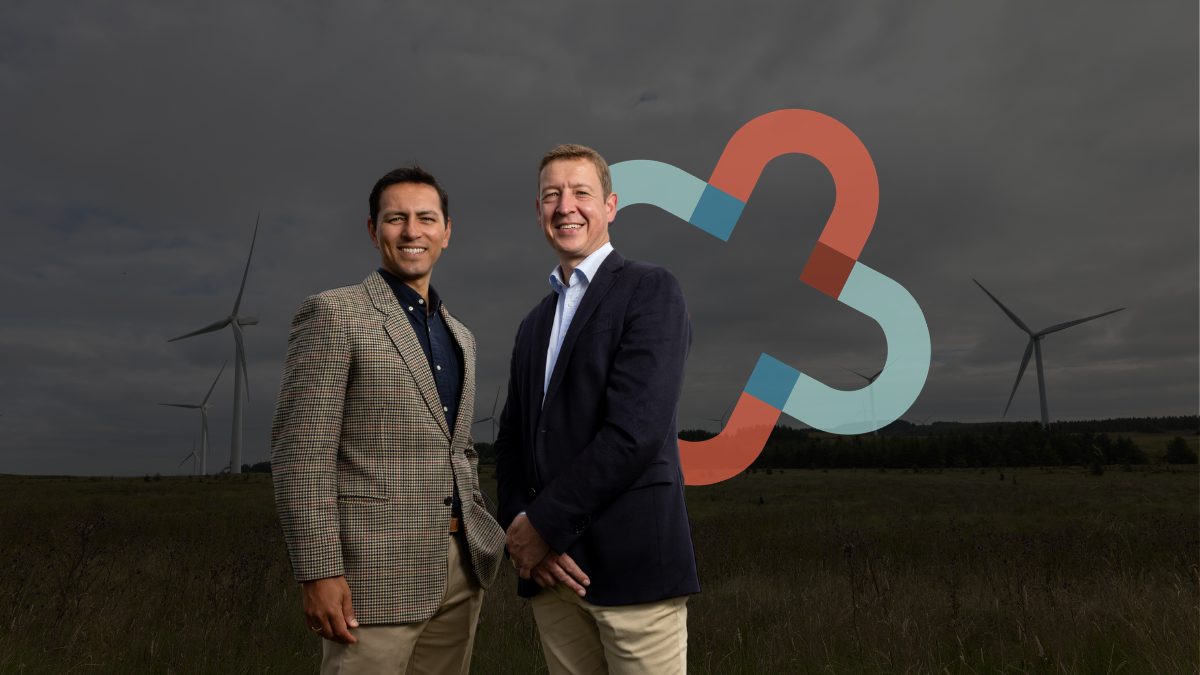

ScotAI is a Scottish company building AI for the industries that keep the world running: energy, aerospace and defence. At its centre is Moray Melhuish, commercial co-founder, whose two decades in oil, gas and offshore wind gave him a sharp instinct for what those industries actually need.
mAint, ScotAI's core product, grew out of problems Moray and co-founder Nick Thomas had each hit in their own careers. It now runs in two forms: an on-premise version built for defence, and a cloud version used across wind, timber, subsea, and oil and gas.
The company has never taken on debt or investment. It has been cash flow positive from day one, and its platform now manages over 50 wind farms worldwide.
Techscaler, delivered by CodeBase, supported ScotAI's move into new markets, including missions to the UAE and New York, opening doors that would have been hard to reach alone.
This case study looks at how ScotAI built something rigorous enough for the world's most demanding industries, without ever taking outside money to do it.

ScotAI's story starts with two engineers who arrived at the same industry snags from very different directions. Moray had spent over two decades in commercial engineering roles, moving through valves and gas turbines, remotely operated vehicles, and offshore wind, before setting up his own consultancy. Nick Thomas had built his career at Tata, Toyota and GE's military jet engine research division, before GE brought him to Scotland.
A mutual contact introduced them, and what began as a conversation about a business idea Nick was working through turned into something more valuable: the two of them realised they were describing the same problem from opposite sides of the industry. Moray had spent years watching software and productivity tools fall short of what engineering services businesses actually needed. Nick's response was simple: he could build that.
Within weeks, ScotAI had its first customer and its first product.
Before Techscaler, ScotAI had already won customers across the UK, Kazakhstan, Pakistan and Canada, entirely without outside funding. What the team lacked was exposure: to bigger markets, to founders solving similar problems at scale, and to the kind of ambition Moray had seen firsthand elsewhere. Scotland's tech, he felt, often carries an unfair assumption that it can't compete with what comes out of bigger markets. Techscaler offered a way past that. Its International Programmes gave ScotAI structured access to the United Arab Emirates and New York, environments where the team could test their product, their pitch and their ambition against a genuinely global market.


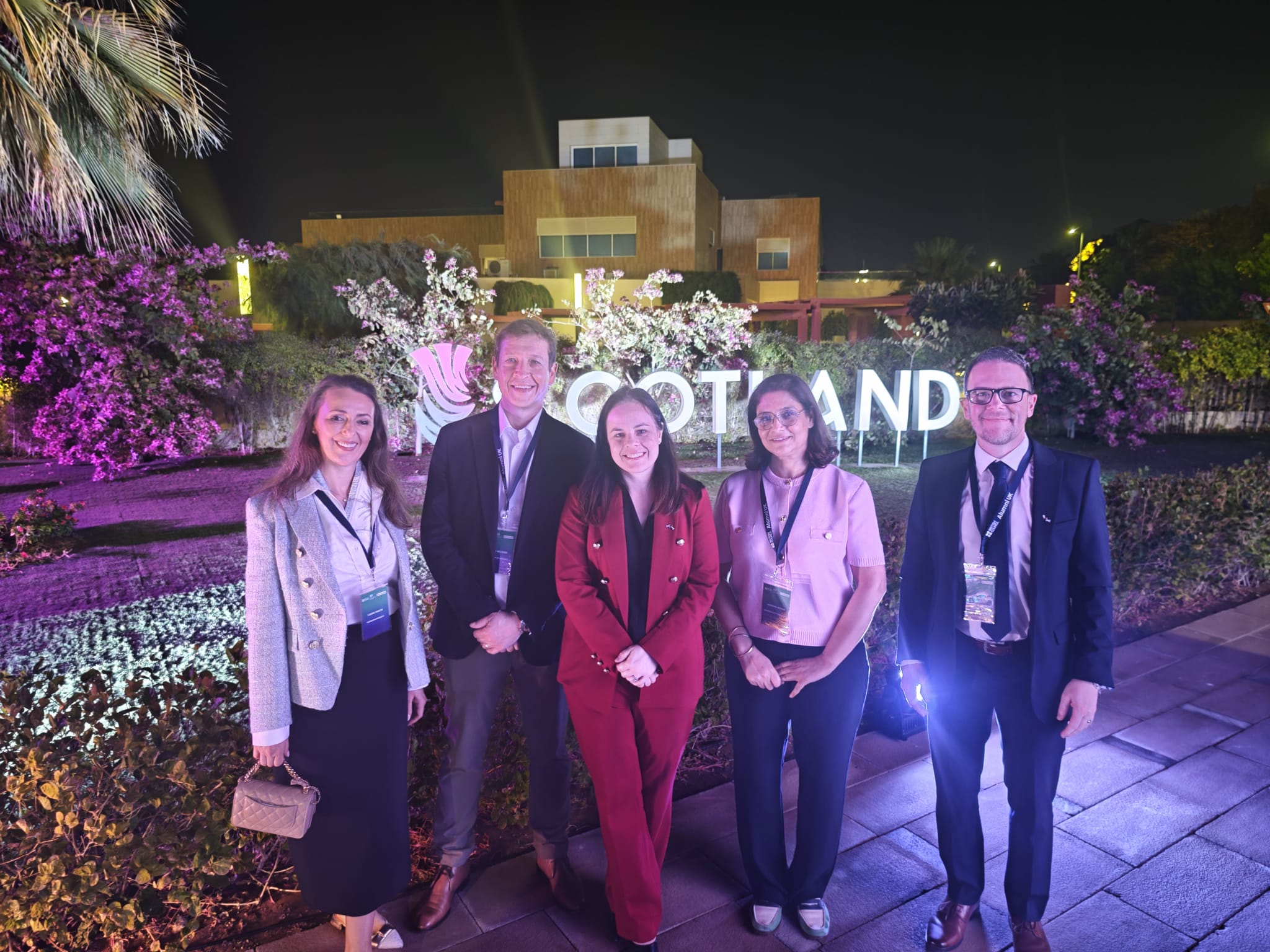
ScotAI's first taste of Techscaler's International Programmes came with a market engagement mission to Abu Dhabi in January 2026, one of six Scottish companies selected for the trip. Moray hadn't spent much time in Abu Dhabi before, and what struck him first was the sense of ambition in the room, a market treating the energy transition as pure opportunity, moving with real speed and real capital behind it. The mission included a pitching session at the UAE Ministry of Investment, where then Deputy First Minister Kate Forbes was in the room to back the cohort in person, alongside representatives from three Emirates. Moray found meeting her genuinely inspiring, a reminder of the level of government backing sitting behind the trip. A British Council reception rounded out the week, surfacing a wider network of Scottish alumni already embedded across the region.
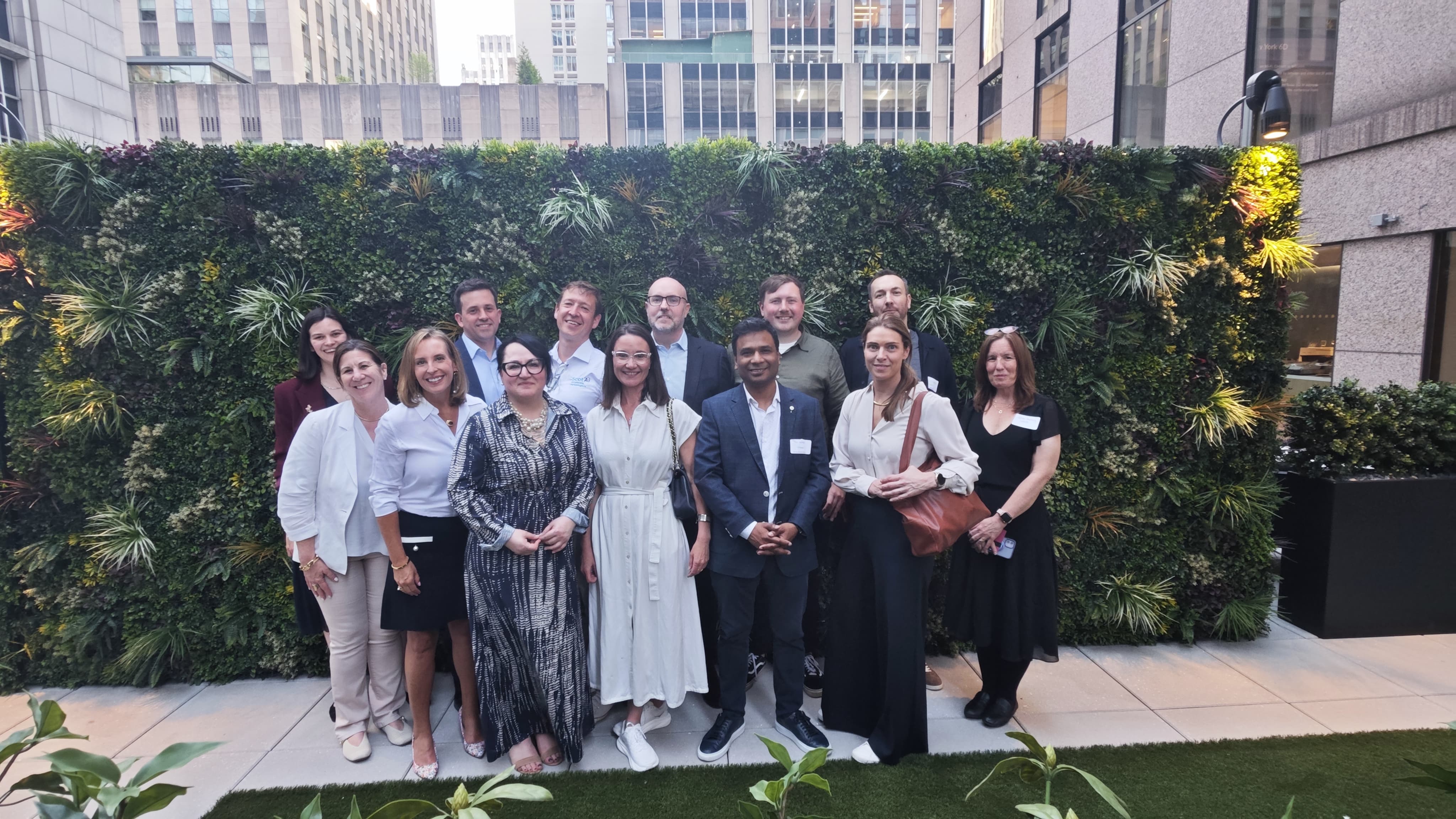
Months later, Moray joined Techscaler's cohort to New York, timed to land inside a16z Tech Week. It ended up a shorter trip than planned, cut down to a single week, but it left a mark. What struck him most wasn't one meeting or one investor conversation. It was the scale of ambition in the room: founders and investors talking about global businesses as the default, not the exception. Techscaler's own event during the week, Spotlight on Scotland, put Moray alongside fellow founders discussing what it actually takes to build in Scotland and win in the US. Watching peers like Natalie Garry of danceSing on stage, he found himself taking notes as much as networking, picking up on how differently they framed their own pitch.
Since Techscaler, ScotAI has kept growing on its own terms: bootstrapped, cash flow positive, and still debt-free. The UAE mission alone has brought in three subscribers in the region and near-daily calls with Middle East customers. Raytheon, one of the world's largest defence companies, evaluated ScotAI's AI against the market using a team of PhD researchers and judged it more accurate and more secure, later presenting it publicly at the DSEI defence conference. mAint's on-premise version, built off a direct request from Raytheon for an offline-capable system, was delivered within six weeks. The platform now manages over 50 wind farms and has driven measurable productivity gains in aerospace component inspection and repair, spanning both civil and defence aviation.


Techscaler, delivered by CodeBase, gave Moray a clearer sense of scale, and the confidence to pursue it. His advice to founders considering the programme is straightforward: get out of the home office, talk to people, and say yes before you've worked out how. For ecosystem builders, government and corporates watching, ScotAI's story shows what a founder-led, bootstrapped business can achieve when the right doors open at the right time.
Follow ScotAI on LinkedIn for updates on new modules, client wins and international growth.

.png)

.svg)