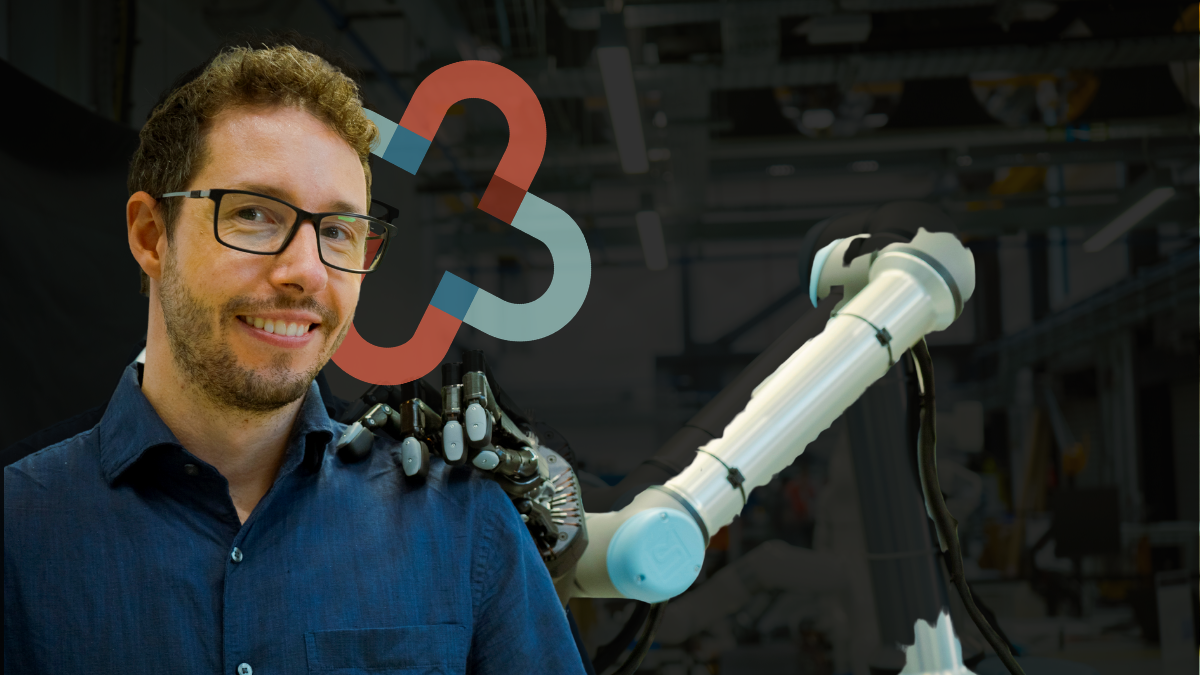
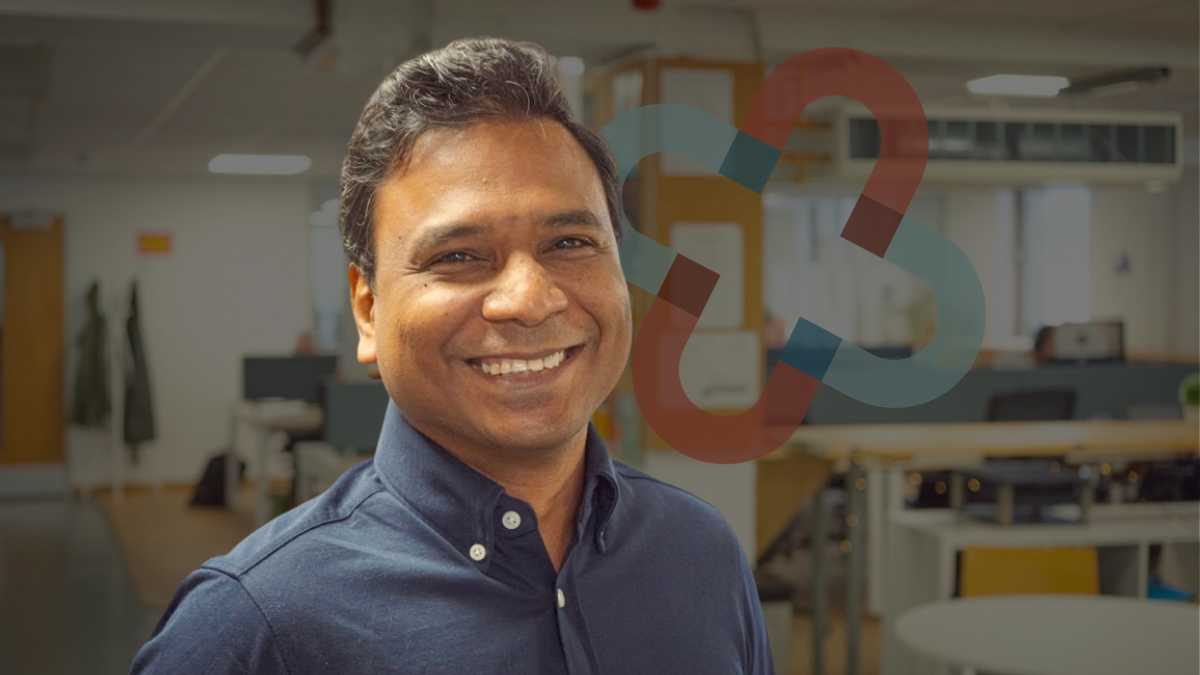
Touchlab is an Edinburgh-based robotics company building the sense of touch machines have never had, led by founder Zaki Hussein, whose fascination with nanotechnology and robotics took root at fourteen and never let go.
Zaki studied Electronics Engineering with Nanotechnology at University of York, then worked as lead developer on a VR stroke rehabilitation spinout. That early taste of startup life stuck, and by the final years of his PhD in electronic skin at Edinburgh, Touchlab had already found its first paying customer.
Since then, the company has built printed, skin-thin sensors that let robots feel pressure and direction with the precision of a human fingertip, paired with an AI layer that interprets what touch means. It now supports partners from warehouse robotics to nuclear decommissioning.
Support from Techscaler, delivered by CodeBase, played a key role in helping Touchlab extend its reach internationally, especially through its programme in Japan.
This case study is about building something the world hasn't seen before, and taking it further than one country can carry alone.

Zaki's path started small, literally. He first set his sights on nanorobotics, machines smaller than a red blood cell, before realising the technology wasn't ready to make the impact he wanted within his lifetime. The skills carried over anyway. Years of building nanomaterials and working in cleanrooms taught him how to make several kinds of sensors, including early electronic skins.
During a government-funded PhD in electronic skin at the University of Edinburgh, he found the method that would make up the foundation of his journey as we know it today: a scalable e-skin capable of solving one of robotics' hardest problems, dexterity. Ocado became Touchlab's first client before Zaki had even finished his PhD, and the company was profitable from year one.
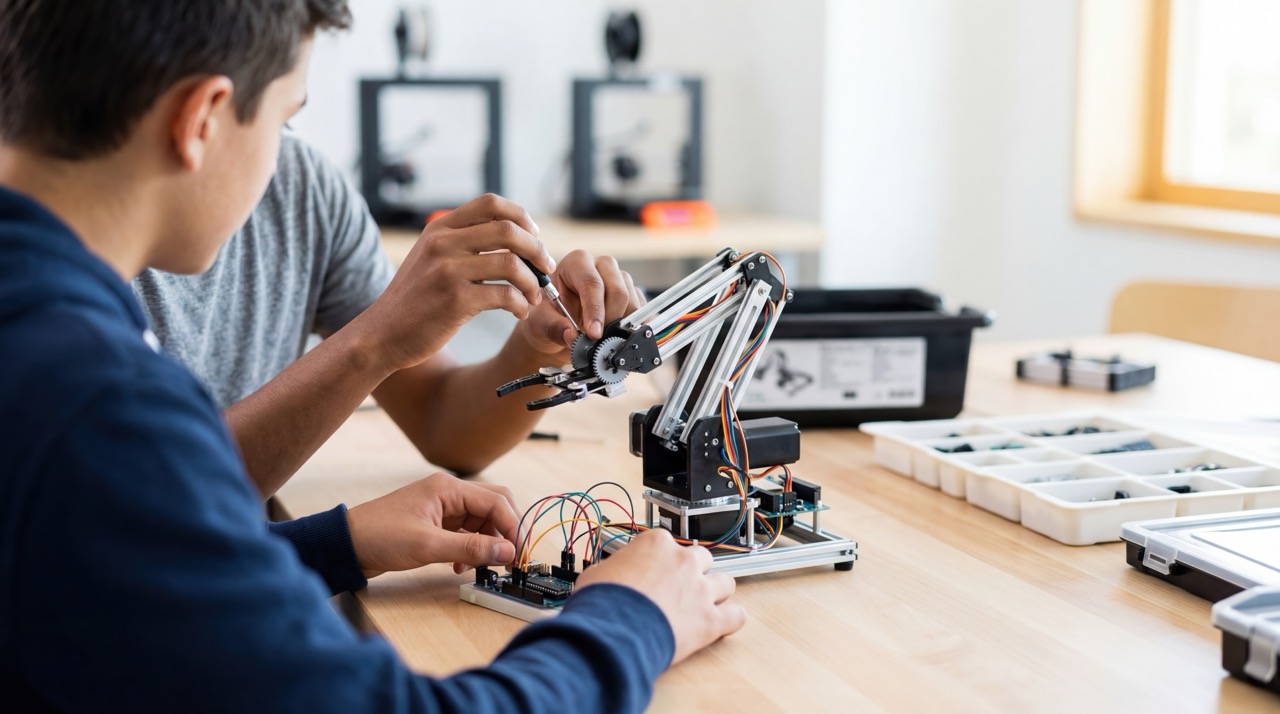
By the time Touchlab connected with Techscaler, the company already had a strong technical foundation. Zaki and his team had built partnerships with leading research institutes, including Honda Research Institute in Silicon Valley, and proven the technology could work. What they hadn't done yet was scale it out. Reaching sophisticated markets meant proving reliability, integration, and production readiness over long validation cycles, not a single impressive demo, and building the kind of trust that takes years rather than months. Touchlab needed exposure to new markets, the right stakeholders, and a route into international partnerships, without an established network abroad to draw on.


.jpeg)
Touchlab's engagement with Techscaler centred on the international programme, including a mission to Japan, where commercial lead Grant represented the company. He went in expecting a strong fit, given Japan's advanced robotics ecosystem, its focus on automation, and a workforce where roughly one in four people work in industrial settings. What became clear quickly was that trust matters as much as the technology. Preparation ran on two tracks. One was cultural: understanding etiquette, hierarchy, and the importance of manners and respect in every meeting. The other was commercial: identifying stakeholders with genuine use cases for e-skin technology, in a market that has worked with robotics for decades longer than most. Japanese buyers were focused above all on reliability, integration, and production readiness, sharpening Touchlab's own thinking around building e-skin that's modular and genuinely usable across different robotic platforms.
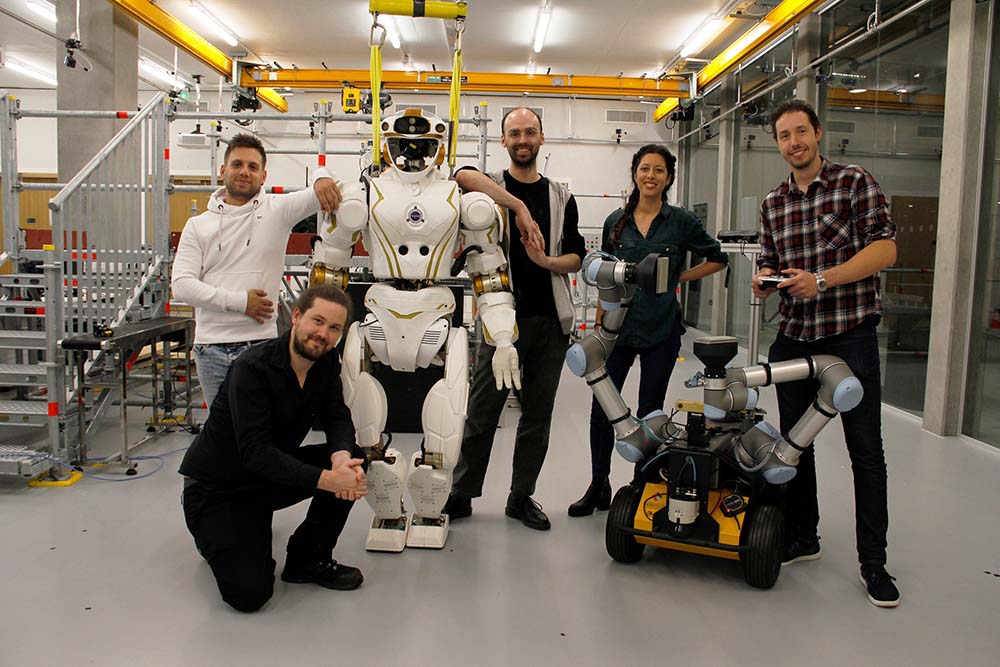
On the ground, Touchlab held 14 pre-arranged meetings with corporate venture capital firms (CVCs), system integrators, and Tier 1 corporations already interested in its e-skin, alongside access to the UK Pavilion at SushiTech and the UK Embassy through Touchlab's own relationship with Scottish Enterprise and Innovate UK. The company also spoke on stage at SushiTech, drawing press attention for its latest hardware release. Techscaler's support on the ground came through Ruth Oliver, VP of Strategic Partnerships at CodeBase, and Allan Cannon, Entrepreneur in Residence at CodeBase, who built introductions and access to a wider network across Japan's technology and robotics ecosystem that would have taken far longer to establish alone. That combination of access, context, and credibility mattered for a deeptech company entering a new market without needing a local office from day one. That relationship with Allan has continued since as ongoing commercial mentorship, sense-checking strategy and challenging assumptions as the company scales. Several of Touchlab's relationships in Japan have been building for years, and some have already turned into real investment interest, with Japanese CVCs the company met through these connections now looking to join its Series A round.
Since taking part in Techscaler, Touchlab has kept building on that momentum. The company has grown to around 22 people, and in June 2026 it launched TACTO, its mass-producible robot fingertip, at ICRA in Vienna, where Zaki also gave a tech talk on physical AI and high-stakes dexterity. The company has taken on clients as varied as Sellafield in the nuclear sector, and its Välkky telerobot work in Finland has continued as part of a wider European hospital innovation programme. Zaki now sits on XPRIZE's Brain Trust Council, having previously led Touchlab's team to the top 16 of the ANA Avatar XPRIZE.
The Japan trip also validated something the team already believed: tactile sensing needs to become infrastructure for robotics, not a one-off component, and several of the relationships built there are still active and developing.
Touchlab is raising a Series A to fund manufacturing at scale, with plans to double its headcount over the next 18 to 24 months. The ambition is bigger than any deal: Zaki wants Touchlab's sensors on almost every robot with a hand or gripper, and its skin on the rest of the robot body over time.


Techscaler, delivered by CodeBase, gave Touchlab a route into new markets, mentorship from someone who had already scaled a deeptech company, and access to stakeholders that would have taken years to reach alone. For other technical founders, Zaki's advice is direct: the commercial and people challenges of scaling are often harder than the engineering itself, so don't underestimate them. For ecosystem builders, Touchlab shows what founders can achieve when given the right doors to knock on.
Follow Touchlab on LinkedIn for updates on product launches, client partnerships, and international expansion.



.svg)