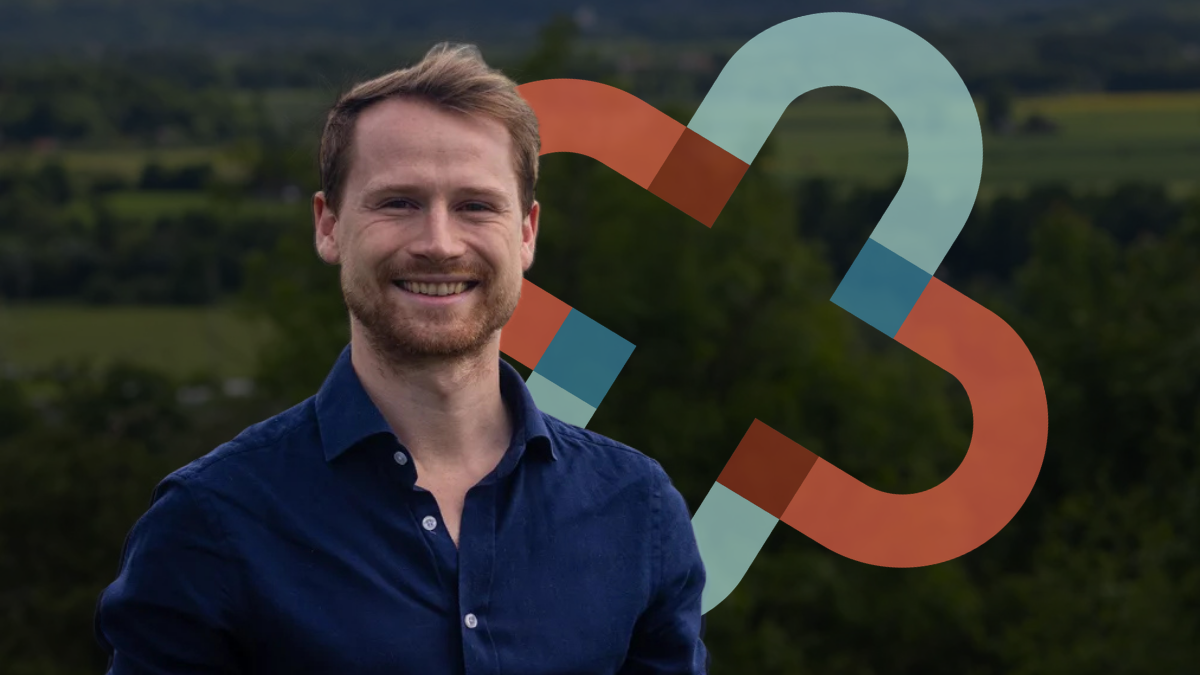

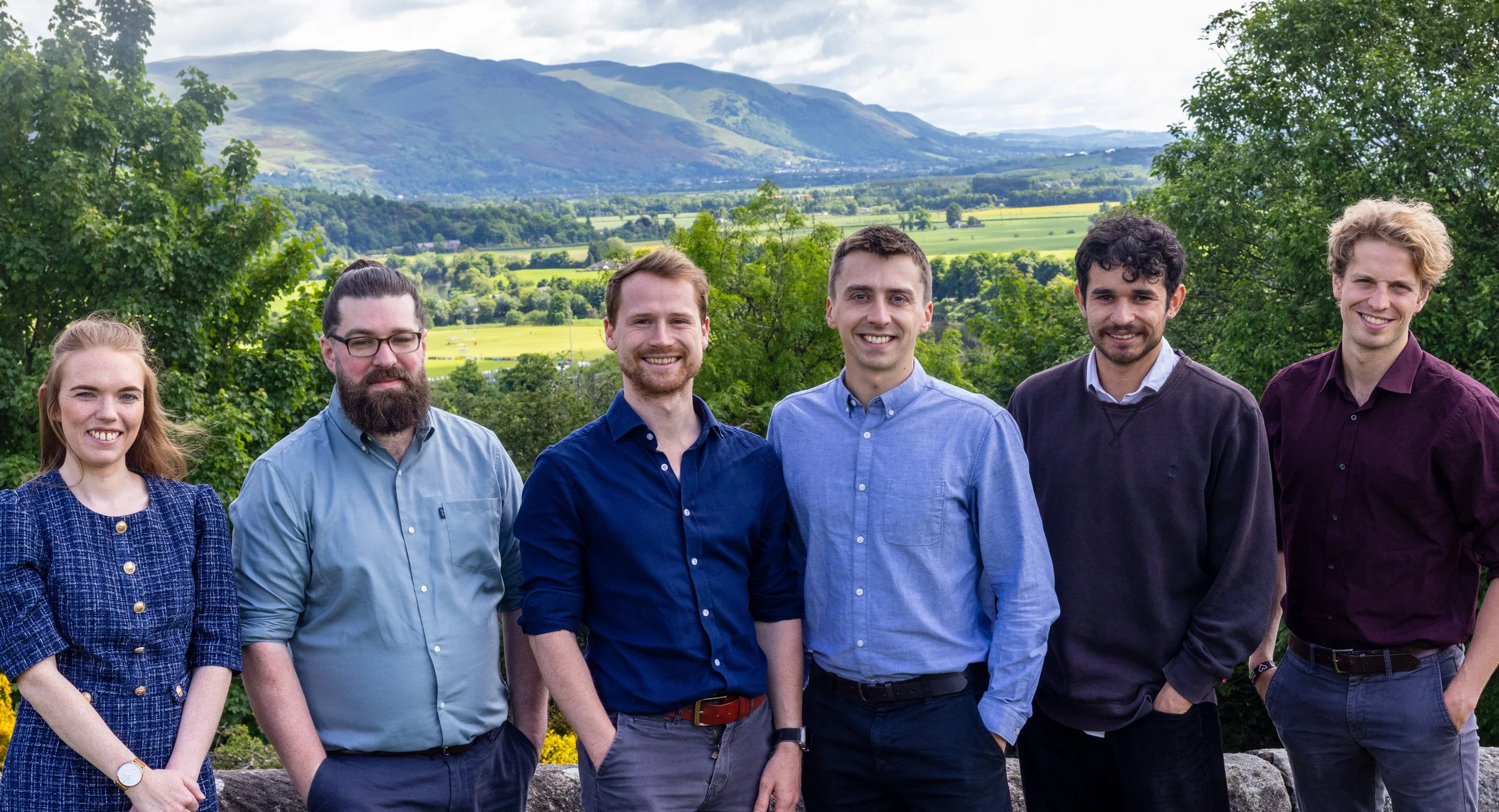
Myriad Wind Energy Systems is a Scottish climate-tech startup working to make wind power more affordable, flexible, and accessible. Co-founder Adam Harris built the company alongside Peter Taylor and Paul Pirrie after the three met during their PhD studies at the Wind and Marine Energy Centre for Doctoral Training at the University of Strathclyde.
What began as academic exploration quickly revealed a commercial opportunity. The team recognised that conventional wind turbines remain expensive to transport, manufacture, and install. Myriad’s modular turbine concept approaches the problem differently by combining multiple smaller turbines within a transportable structure, reducing complexity while improving deployment flexibility.
Since formally registering the company in 2021, Myriad has progressed from research concept to early commercial traction, raising pre-seed funding, building proof-of-concept technology, and expanding its team.
Along the way, the company became a Techscaler member, the national startup programme delivered by CodeBase. Through workspace, mentorship, and community access, Techscaler placed Myriad within a growing network of founders, advisors, and ecosystem partners supporting ambitious startups building globally relevant technologies.
With this piece we explore how Myriad moved from doctoral research to venture-backed climate technology.

The idea behind Myriad emerged during doctoral research into next-generation wind energy technologies. Adam Harris met his future co-founders Peter Taylor and Paul Pirrie while studying within Strathclyde University’s Wind and Marine Energy Centre for Doctoral Training.
During the programme, the cohort encountered research exploring a novel turbine concept that combined multiple smaller turbines into a single system. The concept suggested enormous potential, yet practical pathways for commercial deployment were still unclear.
As their PhDs progressed, the three researchers began exploring how the technology might translate beyond academia. Through the Conception X accelerator, they realised the opportunity to commercialise the work. Within a week of recognising the potential, the founding team committed to building the company that would become Myriad Wind.
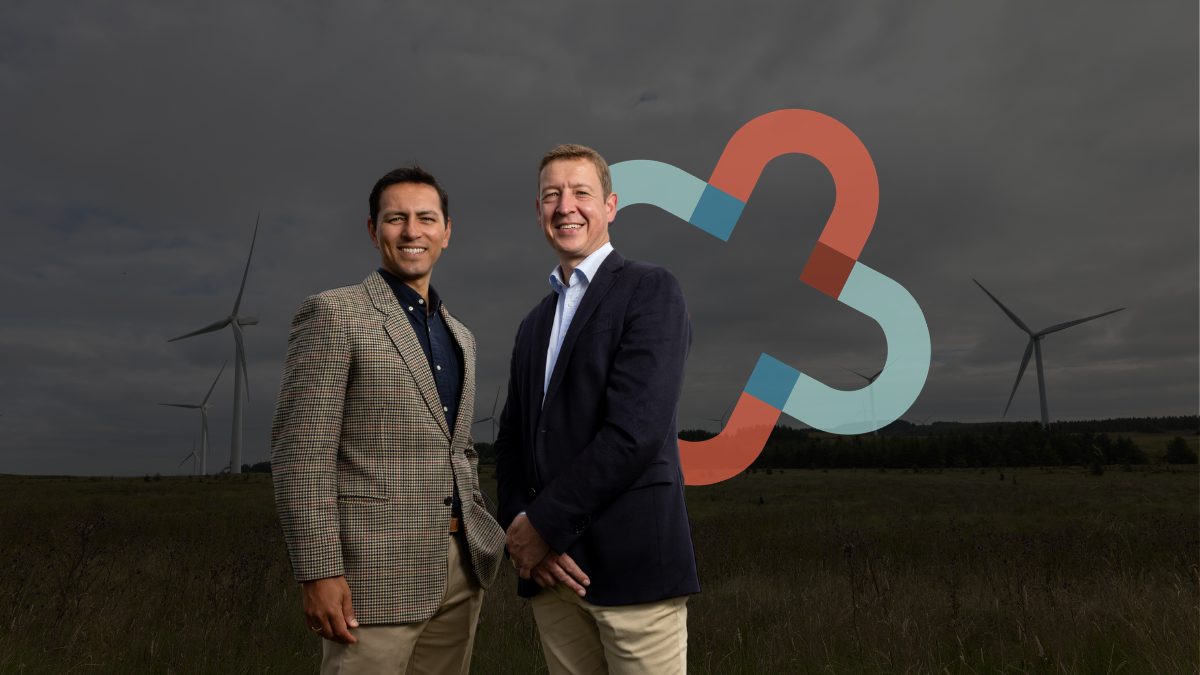
From the outset, the founders understood their technology could dramatically reduce the cost of wind energy across global markets. Achieving that scale, however, required capital levels far beyond the reach of a young company.
The challenge therefore became strategic. The team needed to identify stepping-stone markets where they could deploy their technology early, build commercial credibility, and continue advancing the product.
At the same time, they were developing the company itself. This meant refining a commercial strategy, attracting early investment, and building the credibility required to turn research into a viable venture.



Myriad joined the CodeBase workspace in Stirling in 2023 shortly after securing its pre-seed investment. Within that environment the company became part of Techscaler.
For Harris and his team, proximity to other founders proved immediately valuable. Early stage companies often navigate similar uncertainties around markets, hiring, product development, and fundraising. Being part of a shared environment created space for conversations that offered reassurance as well as practical insight.
Those informal exchanges formed an important layer of support, helping the team recognise that many of the challenges they faced were familiar to other founders building ambitious technology ventures.

Beyond the shared workspace environment, Myriad also benefited from direct access to experienced mentors within the Techscaler network. Founder conversations often extend beyond formal programming, and for Harris, those moments proved particularly valuable.
Advice from mentors and programme leads offered perspective as the company navigated early decisions around hiring, market positioning, and product development. These exchanges helped the founders sense-check ideas and learn from the experiences of others who had previously built and scaled companies.
At the same time, the Techscaler environment placed Myriad within a wider ecosystem of investors, operators, and entrepreneurs. That network strengthened the company’s ability to move forward with confidence while continuing to develop the technology at the centre of its long-term vision.
Following its early progress, Myriad entered a new phase of development focused on turning its technology into a commercial product. Pre-seed funding enabled the team to build and operate a two-kilowatt proof-of-concept turbine, which ran for twelve months and generated valuable engineering insights.
During this period the founders also refined their market strategy. Rather than targeting large-scale wind farms immediately, the company identified an initial commercial opportunity among rural businesses facing high electricity costs.
This approach allowed Myriad to introduce its modular turbines into markets that benefit from on-site generation while continuing to advance toward larger opportunities.
Today the company is preparing to build a full commercial prototype and bring its first turbines to market. As the technology develops, the long-term ambition remains clear: delivering more affordable renewable energy through a radically different approach to wind turbine design.


Myriad’s journey illustrates how early stage research can evolve into globally relevant climate technology when the right ecosystem surrounds it. Programmes such as Techscaler help bridge that transition by connecting founders with mentors, peers, and infrastructure designed for growth.
For governments, corporates, universities, and investors shaping innovation systems, stories like Myriad demonstrate the importance of founder-focused support structures that translate research into scalable businesses capable of tackling global challenges.
Follow Myriad Wind on LinkedIn to track their next development milestones.

.png)
.png)

.svg)