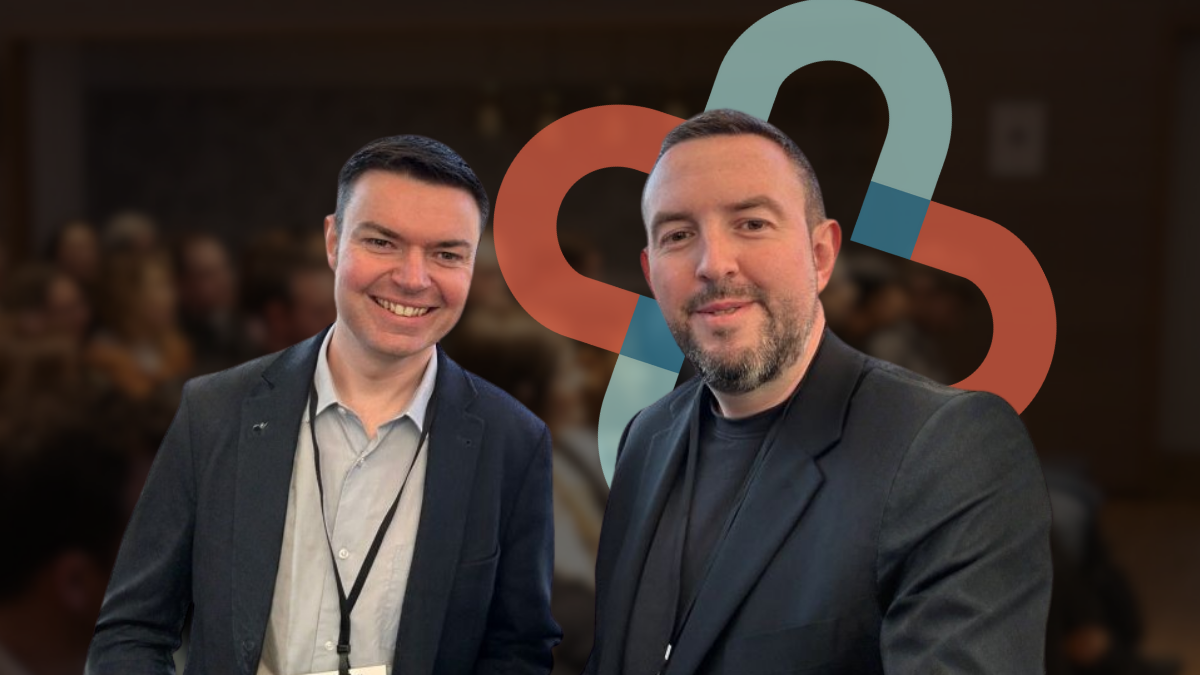
WITR is a Scottish startup building a simple but powerful tool for a well-known pain point: walking into a crowded networking event and having no idea who is in the room.
For co-founders Craig Somerville and Geoff Todd, the idea emerged not from the events industry but from lived frustration as founders trying to navigate industry gatherings.
Craig, an introvert who dreaded the awkward moments of small talk and the guesswork of approaching strangers, realised after attending a Techscaler early stage showcase that he had probably missed dozens of meaningful conversations simply because he didn’t know who else was there. A chance chat with another founder sparked the idea: what if people could instantly see everyone in the room and what they were interested in?
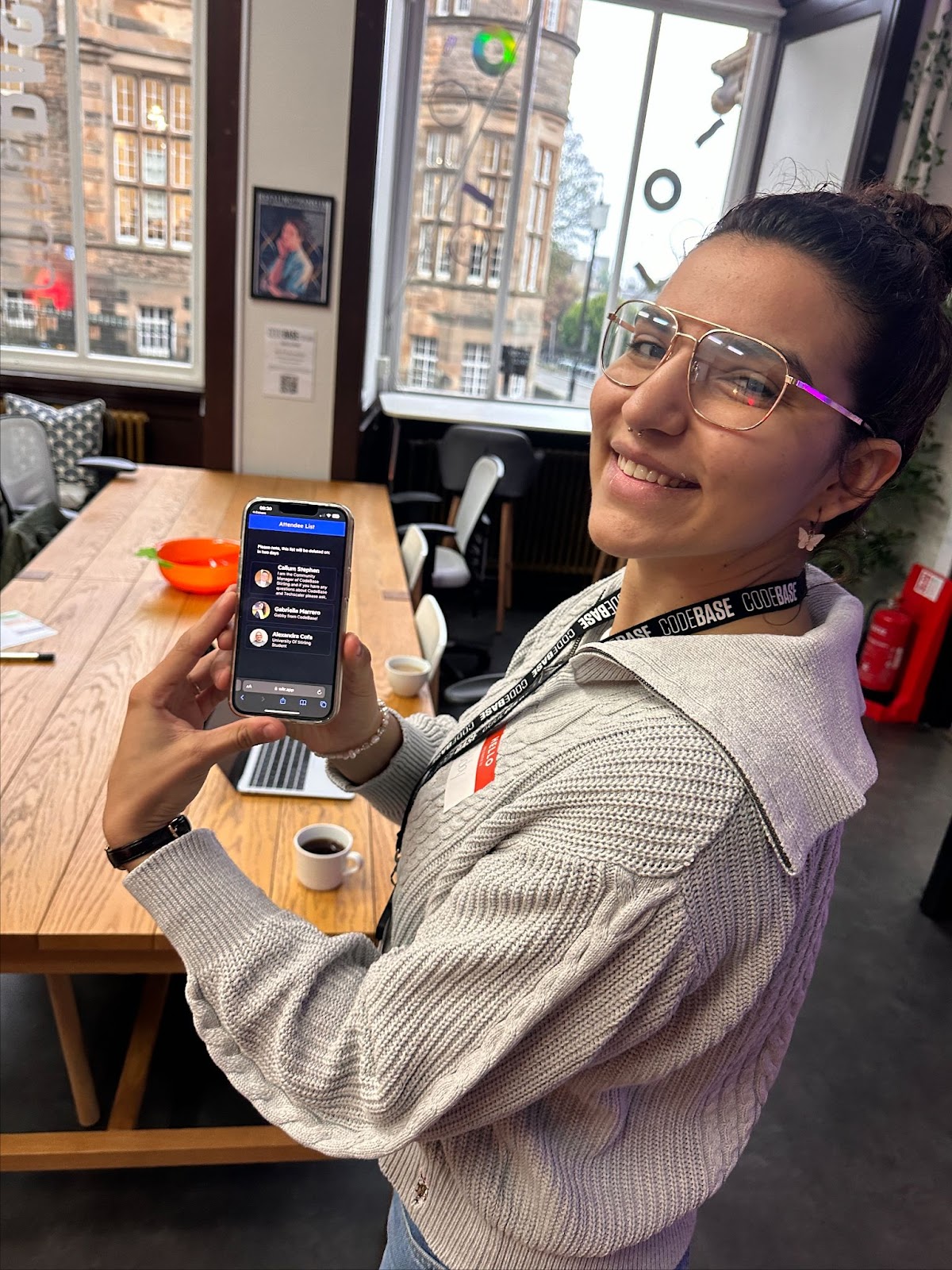
That moment became the foundation of WITR — which stands for Who’s In The Room — a simple, browser-based tool that allows attendees to check in via QR code, share a conversation starter, and instantly view others in the space. The team built the earliest prototype with speed and scrappiness, then refined it through ongoing support from CodeBase staff such as Natalie Hodgekiss, Kelly Gardner, and the wider Techscaler team, who immediately saw WITR’s potential to deepen engagement at community events.

WITR began as an attendee list tool, but quickly proved its value inside real-world events across Techscaler hubs. At founder meetups, Unfiltered sessions and regional showcases, event organisers found that participants were more engaged, conversations were more targeted, and follow-ups dramatically improved thanks to WITR’s 48-hour window for post-event connection. The tool also solved a longstanding operational burden: instead of manually compiling static attendee lists, organisers received a live, GDPR-compliant list generated by attendees themselves.
This real-world validation came hand-in-hand with encouragement from the Techscaler community. Staff members championed early versions, tested beta features and offered the kind of grounded, human support that keeps young startups moving. As Geoff notes, that encouragement was “life-giving” during earlier and more uncertain stages.
As WITR gained traction, Craig and Geoff were faced with a common early-stage challenge: the product worked, people loved it, but the business model and operational structures needed to mature. Their main customer wasn’t the attendee, but the event organiser. That shift required new capabilities in pricing, positioning, and product prioritisation.
The founders’ challenge boiled down to three core needs:



Through Techscaler’s support system — from mentor conversations to community testing grounds — WITR transformed from a clever idea into a repeatable, scalable networking tool.
Techscaler offered a space where Craig and Geoff could test features, validate pricing, and get real-time user reactions. Conversations with clients helped the team navigate everything from product messaging to commercial focus. Peer founders reinforced the importance of resilience, experimentation and, importantly, failing fast — a theme Craig repeatedly emphasises as essential to entrepreneurship.
One catalytic moment came when UK networking leader Andrew Charlton (#Events) asked WITR to build a feature he needed. His insight directly led to the sponsor-logo functionality and UTM-tracked engagement — today a key part of WITR’s value to organisers.

Scaling WITR has required more than code — it has demanded infrastructure, mindset shifts and strategic grounding. Techscaler helped the founders build all three.
Through programmes, mentoring and peer discussions, Craig and Geoff gained deeper understanding of product-market fit, user psychology, data privacy, and the realities of selling into the events ecosystem. They refined WITR’s position: a simple, human-centred networking layer for small and mid-sized events, not a bloated all-in-one conference platform.
As the team explored opportunities beyond Scotland, a Techscaler international trip to Silicon Valley became a turning point. Craig encountered a radically different mindset: directness, optimism, and a culture where “yes” comes before “no.” Test events in San Francisco confirmed demand and pushed WITR to prepare for higher scale, faster expectations, and a more demanding customer base.
The greatest transformation for WITR has been perspective. Early versions were experiments: a simple attendee list solving a simple problem. But through Techscaler’s community, programmes and international exposure, WITR has grown into a platform designed to scale, for privacy, and around real human behaviour.
With the addition of AI-powered matching and conversation prompts, the tool aims to break down social barriers without replacing real interaction. WITR’s focus remains what it has always been: making meaningful in-person connections easier, especially for those who find networking difficult.
The upcoming affiliate programme, shaped through Techscaler mentorship, will allow seasoned networkers and community builders across Scotland and beyond to introduce WITR into their ecosystems, driving user-led growth exactly in the same way the product strengthens connections at events.



WITR’s journey offers clear lessons for founders building in event-tech or any community-led sector:
Techscaler by CodeBase gave WITR the community, mentorship and international exposure that helped transform a simple idea into a scalable, human-centred platform — designed to make networking genuinely work for real people.






.svg)