

LumiAIres Ltd is a deep tech company building neuromorphic photonic processors designed to make AI computing dramatically more energy efficient. At the centre of the story is Dr Giulia Marcucci, who spent nine years across academia and startups developing the core technology before taking the leap into company building. The venture emerged from a clear commercialisation path: a way to build neural networks made of light and create a processor capable of running AI with far lower energy demands than conventional systems. The technology can reduce the compute needed for certain tasks from billions of parameters to hundreds, with the chip solving problems at roughly 10 to 40 watts. Support through Techscaler, delivered by CodeBase, helped Giulia move from researcher mindset to founder execution, widening access to community, mentorship, investor conversations, and international perspective.

LumiAIres grew out of years of technical research into how neural networks could be built using light rather than relying solely on conventional electronic computation. Giulia had spent nine years in academia and startup environments developing the underlying science before recognising there was a clear route to commercialisation. The company was then built with her co-founder, Jeremy Delhommeau, whose manufacturing and programming background helped turn the technology into a product direction grounded in real-world use. At its core, the company is addressing a pressing infrastructure challenge: the rising energy cost of AI. Its processors are designed to reduce computation, improve efficiency, and enable secure, sovereign deployment in environments where power, cooling, and resilience matter.
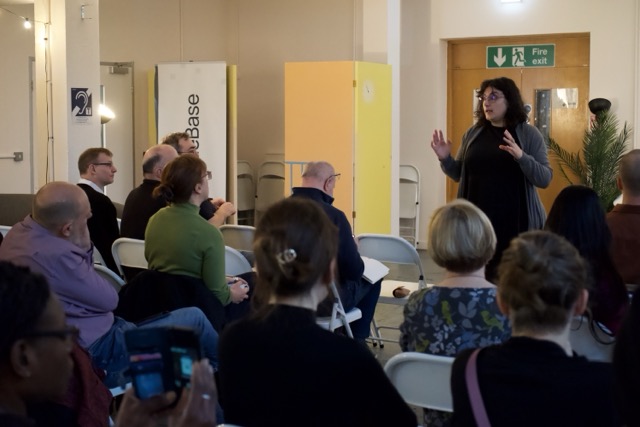
Before deeper engagement with CodeBase and Techscaler, LumiAIres was navigating a familiar deep tech gap. The technical ambition was strong, but the path from research to venture building was harder to access. Coming out of academia without forming a spin-out created friction, especially because many programmes aimed at deep tech were geared toward academics or newly graduated PhDs. Hardware also brought very different economics from software. Building a lab alone was cited as costing more than £1 million, while the company expected a product timeline of around three years. Alongside funding constraints came the challenge of credibility, with Giulia describing the need to keep stepping into rooms despite anxiety, scepticism, and limited trust from others. Techscaler helped reduce that isolation and add structure.


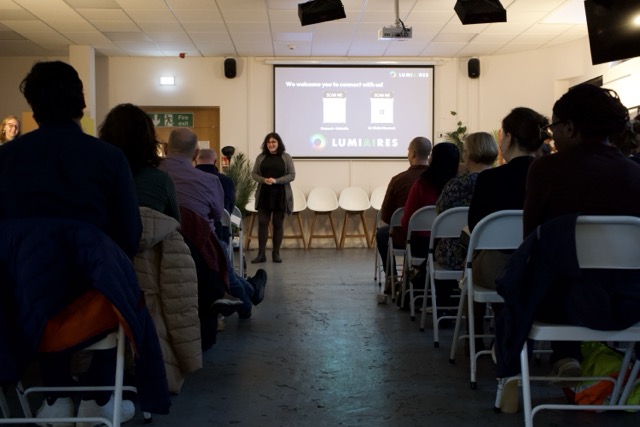
CodeBase first entered the picture through a breakfast event that introduced Giulia to the Startup First Steps programme, now Catalyst. That early contact mattered. The programme helped with the software and business side of the venture, while also providing connection to a founder community outside academia. Standard techniques such as the five Ws and the mother test helped sharpen customer conversations and market understanding. From there, Techscaler’s Silicon Valley programme became a turning point, a major game changer that shifted Giulia’s mindset from academic researcher to entrepreneur through full immersion, higher-level conversations, and exposure to a more ambitious operating environment. Along with this engagement with CodeBase’s Greentech programme as a speaker opened different doors into sufficient enterprises and built valuable connections with new green data centers like DelaVida.
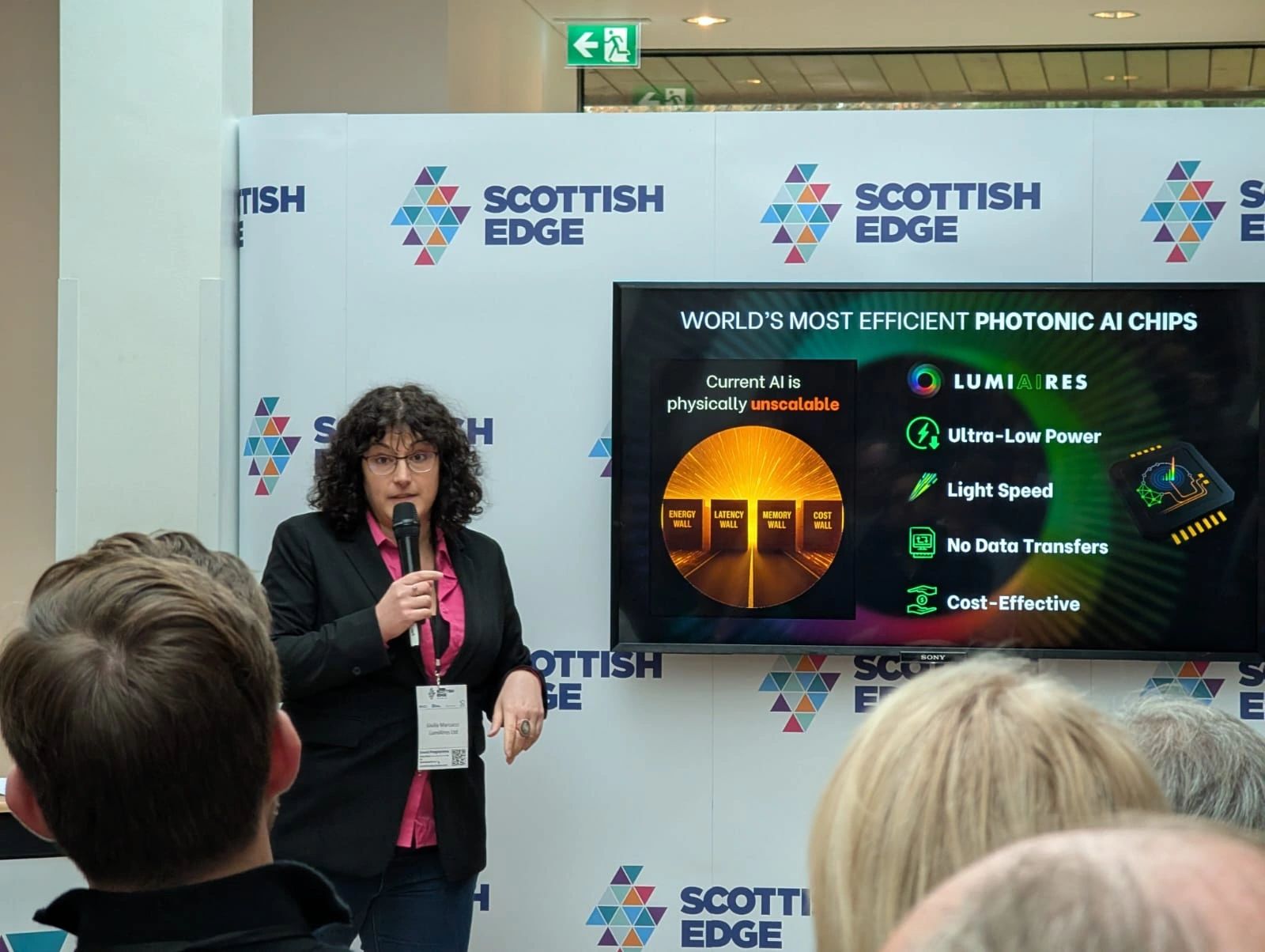
The value of the programme extended beyond exposure. Meaningful support from advisor Liza Sutherland, alongside deep tech specialist Alan Clark, in helping refine market validation and qualify opportunities at an early stage. Techscaler also widened the company’s network, from founder peers and investor conversations in Silicon Valley to Greentech speaker engagements and a pitching event at Mindspace. Just as important was the sense of fit. Giulia reportedly felt immediately at home in Silicon Valley’s technically oriented environment, while also returning with sharper conviction about solving AI’s energy problem. CodeBase’s programmes did not replace founder resilience, but they gave it direction, community, and practical momentum.
After engaging with CodeBase and Techscaler, LumiAIres moved into a more accelerated phase of company building. The Silicon Valley experience directly led to a market pivot away from hyperscalers and big tech toward space and defence, a shift that unlocked further grant support and sharpened commercial direction. Early funding included a £10,000 Scottish EDGE wildcard award, Scottish Enterprise support toward an Innovate application, later grants through the Higgs Centre incubator and Space Scotland’s Pivot into Space programme, and then the larger Scottish EDGE award. The company has since completed its pre-seed round and is now running a high-value seed round, with Techscaler’s support backing that progress. Operationally, the team has grown siginificantly, and is nearing a commercial prototype ready for validation in relevant environments, including signal processing applications.


For LumiAIres, support from CodeBase and Techscaler came at a point where technical excellence alone was not enough. The founder needed founder community, practical frameworks, market validation, and access to rooms that could accelerate belief as much as opportunity. This case shows the role tailored ecosystem support can play in helping deep tech ventures move from promising research to credible company building. For founders, it is a reminder that the right programme can sharpen direction. For the wider ecosystem, it shows what becomes possible when support is ambitious, founder-led, and built around real barriers to scale.



.png)

.svg)