
The Conversation Scotland Keeps Having About Scaling
Every serious conversation about scaling Scottish companies eventually lands on the same question: where's the funding coming from?
It's a reasonable question. Capital is real, the need for it is real, and the gap between what early-stage companies can access and what they need to grow has been well documented. But there's a habit embedded in that conversation that's worth examining. We talk about capital as though it's the primary variable, the thing that, once solved, unlocks everything else. And that assumption is doing some quiet damage to how Scotland thinks about what growing companies actually need.
The companies that stall between early traction and durable growth are rarely short of ambition. Many of them have revenue. Some have investment. What they're navigating is something harder to name and considerably harder to design support around: a stage where everything that got them here stops being enough, where the energy of a small founding team runs up against the complexity of a company that now needs to operate like a system rather than a sprint. Capital can arrive at this moment and still not move the needle, because the constraint isn't the money. It's the judgment about what to do with it.
What Changes When You Put the Founder at the Centre
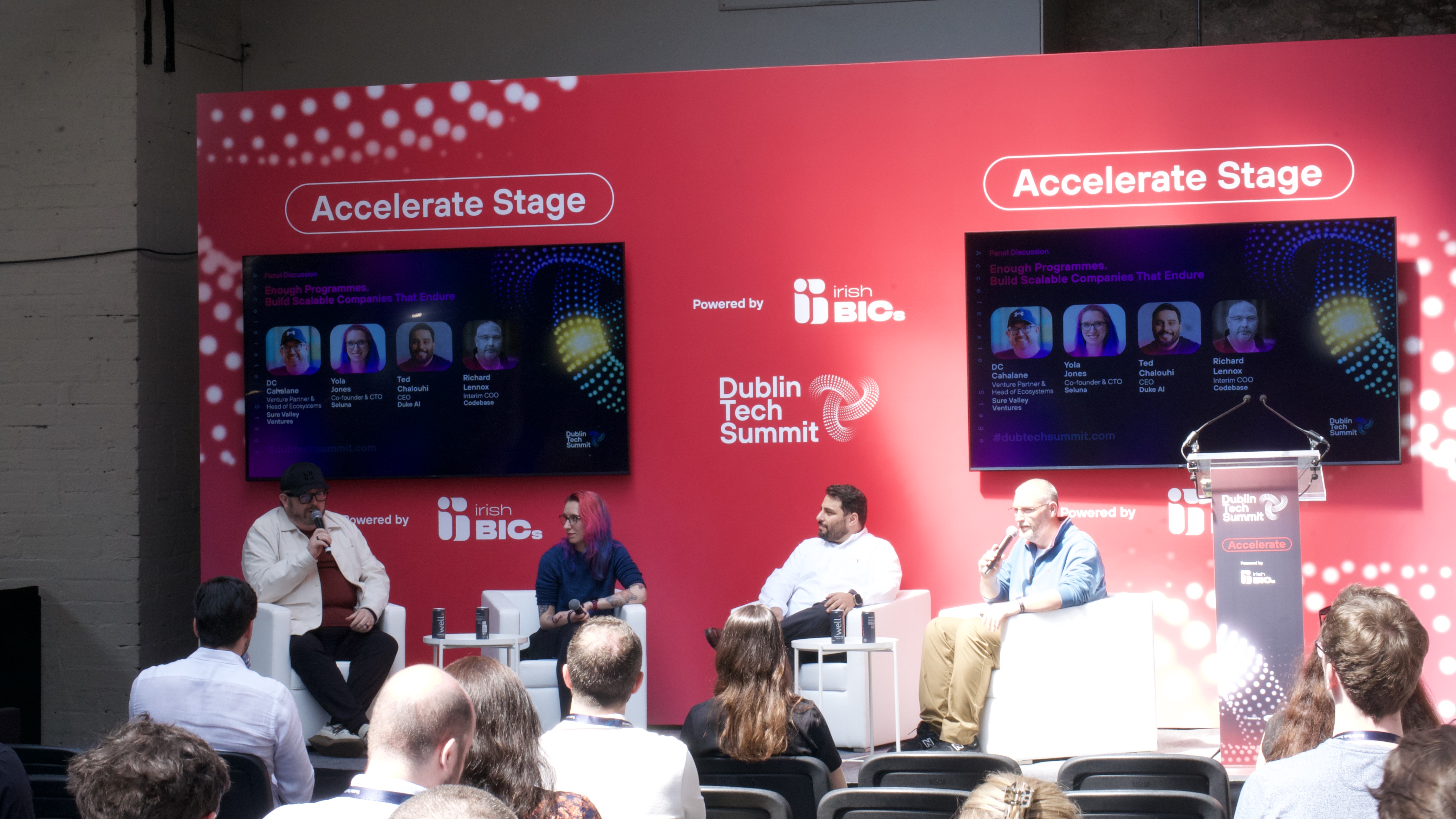
Richard Lennox has spent over two decades building and scaling companies in Scotland, and his new paper starts from a different place than most policy thinking on this topic. Rather than asking what programmes Scotland should have, or how much should be invested in the ecosystem, it asks a more precise question: what does an individual founder actually need, at each specific stage of building a company, to move forward? The answer turns out to matter a great deal for how support is designed, funded and evaluated.
The paper introduces a framework built around three support dimensions, one of which is capital access, and it's deliberate about the distinction between capital awareness and capital access, between the right kind of funding for a company's stage and destination versus the most visible option available. That distinction alone reframes a lot of what Scotland currently offers to founders at the growth stage, and it opens up a more interesting conversation about what genuinely useful support looks like when the company is past the start but not yet through the hardest stretch.
A Different Way of Thinking About Support
At the centre of the paper is a framework built around two questions: where is this company going, and what does it need right now to get there?
Lennox maps the answers across a matrix, three dimensions of support plotted against four stages of a company's journey, from ideation through to scale. Capital access, customer and market access, operator-led support. Each one looks completely different depending on where a company actually sits in its development, and the framework is precise about that distinction in ways that most support systems aren't. A founder at the growth stage doesn't need a webinar. They need someone in the room who has managed the same decisions under the same pressure.
What makes the framework genuinely useful is that it doesn't prescribe which organisations should deliver what. It's a lens, one that can be held up against Scotland's entire portfolio of entrepreneurial economy investment to reveal where the matrix is well served and where founders are being left without what they need most.
Why This Moment Matters
Scotland already has the investment, the talent and the early-stage momentum. What's been harder to build is a coherent way of thinking that ties all of it together and ensures every pound of that investment is traceable to a founder's need at the right stage. The paper makes a compelling case that this isn't a resourcing problem, it's a design problem, and that solving it doesn't require new budget. It requires a sharper mental model for how support is commissioned, delivered and measured.
The framework Richard proposes is practical enough to apply to any company at any stage, and specific enough to reveal where Scotland's current portfolio of support is genuinely working and where it's leaving founders without what they need most. It's a serious piece of thinking from someone who has lived the problem firsthand.
Download and read the full report here.




.svg)