Practest Global builds highly functional websites for GP surgeries and other healthcare practices, working to ease administrative burden and improve communication between practices and patients. At its centre is co-founder Sacha Wright, who leads the business from Kirkwall, in Orkney, alongside Owen Terry, driven by a simple conviction: technology should give doctors more time with patients, not less.
Founded as a bootstrapped venture, Practest Global has grown from an early idea into a standard UK product, alongside bespoke work for international partners, including a healthcare-adjacent client in the US. The team has built its reputation on fixing high-touch, high-volume processes, the kind of small changes that free up meaningful time for GP staff.
Support from Techscaler, delivered by CodeBase, has offered scaffolding at key points along that journey. Early CodeBase mentorship gave her the backing of foundational knowledge, and that support later grew into a Techscaler Funding Accelerator and a Silicon Valley immersion. Most recently, it's taken her to a high-footfall zone in London Tech Week.
This is a case study on building conviction slowly, choosing the right support at the right moment, and staying close to the problem that started it all.

Sacha's father was a GP on Orkney, and the way he practised medicine sits at the centre of why Practest Global exists. He knew his patients well enough to diagnose most of them before they said a word. Late in his career, when he was given a computer for patient records, he kept it under the desk so it wouldn't get between him and the person in front of him.
That instinct, that technology should support the relationship rather than replace it, runs through everything Sacha and Owen have built. She talks about a healthcare system where new digital tools have been added faster than practices or patients have been able to make sense of them, layered on top of a workforce, pharmacists, social prescribers, nurses, that patients often don't know is there. Her father's egalitarian belief in the NHS, and his conviction that everyone deserves good care regardless of circumstance, is the foundation Practest Global's product decisions get measured against.

Before Techscaler, Sacha had conviction but limited reach. Building from Orkney meant fewer natural connections to investors and fellow founders, and no established route for testing whether Practest Global's UK product could translate to the US market. Fundraising felt like a real possibility, but she wasn't yet sure of the right timing, or what being investment-ready actually looked like.
What she needed was flexible and credible support that could meet Practest Global wherever it happened to be, along with genuine access to people who understood both healthcare and the mechanics of scaling a startup.



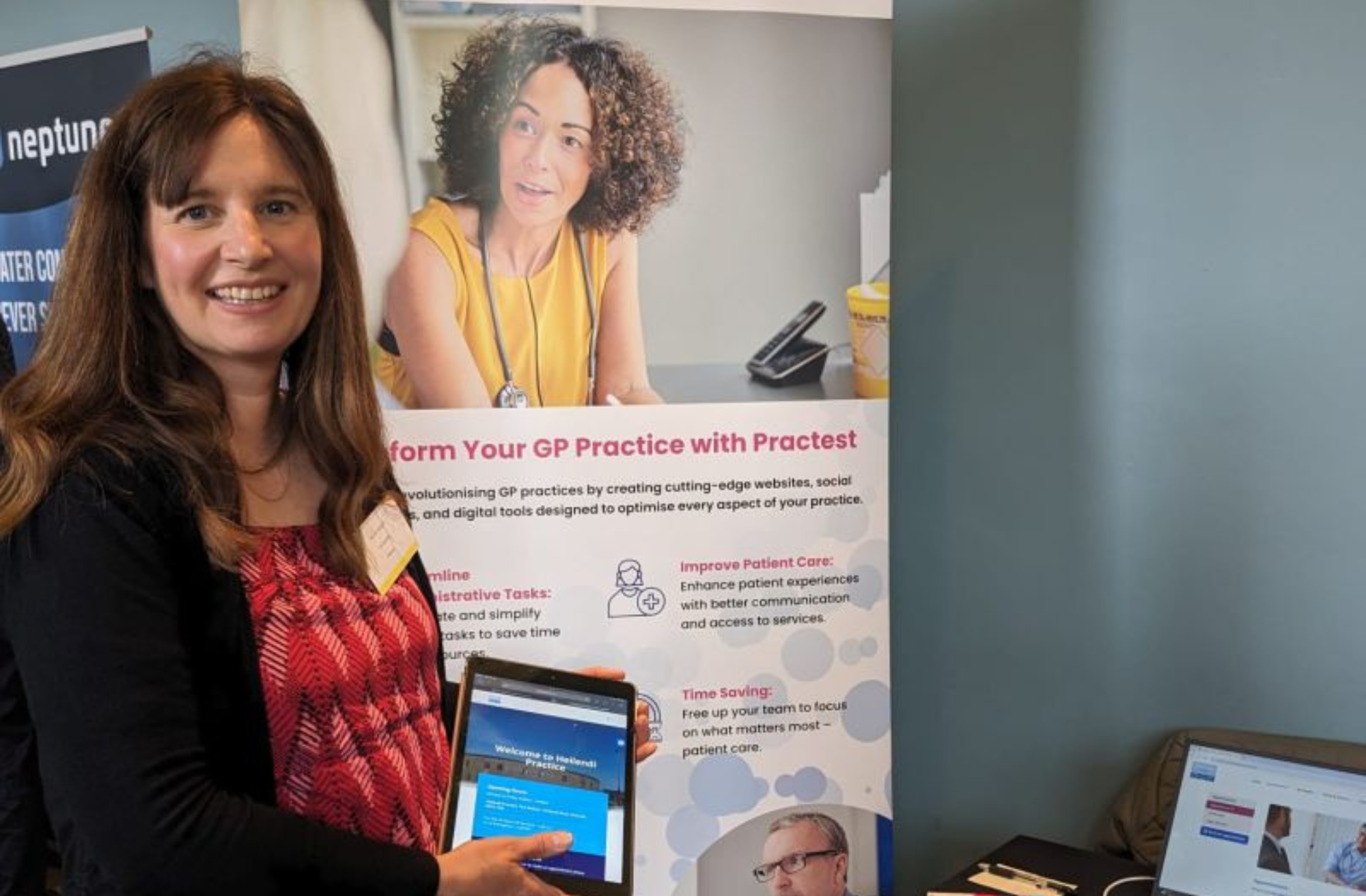
Sacha's relationship with Techscaler runs deeper than a single trip or grant. It started with the Pathfinder accelerator in the Highlands and Islands, before Techscaler existed, and continued through CodeBase mentorship that evolved into Techscaler itself in its earliest days, putting Sacha among its very first members. That early mentorship gave her something she hadn't had before: confirmation that Practest Global was a good idea worth building on, at a stage when she needed to hear it most.
In 2024, she joined the Techscaler Funding Accelerator, a three-month programme with Focused for Business. It didn't lead to a raise straight away, but it gave her clarity on exactly what investment-readiness would require, whenever the timing was right.
.png)
Techscaler's support has also taken Sacha further afield. In May 2025, she joined the Silicon Valley cohort for three weeks of founder-led immersion, treating the trip as a deliberate fact-finding mission. She came back reassured that Practest Global's technology wasn't behind the pace of one of the world's most mature startup ecosystems, with a sharper read on how UK and US healthcare markets diverge, and a US customer relationship that deepened from meeting them in person.
A year later, Sacha represented Practest Global at London Tech Week 2026, part of an eight-strong Techscaler cohort with a stand at Olympia. It put her in front of potential customers and partners she wouldn't otherwise have reached, and reinforced something she'd come to value most about the programme: it consistently opens doors that would be out of range on her own.
Practest Global's growth has been backed by real external recognition. The business secured Scottish EDGE funding in December 2023, and was named Most Promising New Business at the Highland Business Awards in September 2025. Together, they mark a business that's moved from an early idea to one the wider Scottish startup ecosystem is actively backing.
That recognition sits alongside real commercial progress. Practest Global is building its first dedicated US product for a healthcare-adjacent partner in the addiction space, exploring a partnership with an AI lab focused on responsible use cases in healthcare, and targeting a fresh wave of GP practices left searching for a new provider after a major competitor shut down.


Sacha is candid about what building Practest from Orkney, as a woman, has actually required. Female founders often start with less capital and fewer built-in connections, carrying caring responsibilities that shape everything from travel planning to how much risk they can take on. Rural geography adds its own layer, since accessing investors, mentors, and peers usually means significant time and cost that founders based in central hubs don't have to factor in.
Her advice to founders facing the same starting line isn't to wait for the odds to even out. It's to build the network anyway, online where that's what's possible, and in person whenever the chance comes up, because that effort compounds. Techscaler's role, in her account, has been to close some of that distance, offering flexible access to people and opportunities that would otherwise sit out of reach.


.png)
.png)

.svg)